




Bird Sightings
19/07/2026 – Another Hot Day!
By Thomas Weston
A Bird Day with nice fine weather again, but today a cool breeze in the air which was nice and refreshing, even a little cold at points.
A 5am start and I walked down to Millcombe where I opened a couple of nets and sat waiting. The birds were quite quiet to begin but gained in activity soon after 6am when I began to catch a few individuals. There were Goldfinches and Linnets in the bushes and the sounds of a couple of Willow Warblers. A couple of Peregrines were searching for any highflying migrants, so everything stayed low and in the bushes for the next hour. Lucile joined just before 7am, and this coincided with the Willow Warbler wave. A Lundy phenomenon whereby Willow Warblers start to descend in the valley and pass from top to bottom in a wave. The flocks can vary between a couple to 10 and the following round we caught the next 3 birds, followed by a round of 10 and so on... The wave was quite late today and arrived about 07:30, the other day it was at 06:00. This is something we are intrigued by. Do they spend the night on the island and then head off SE? Do they fly in and drop out the sky onto the island at dawn, find each other and head SE? The majority were new and juveniles, with yet again two retraps being adult birds. One was ringed on Friday and the other ringed last year which was very nice!
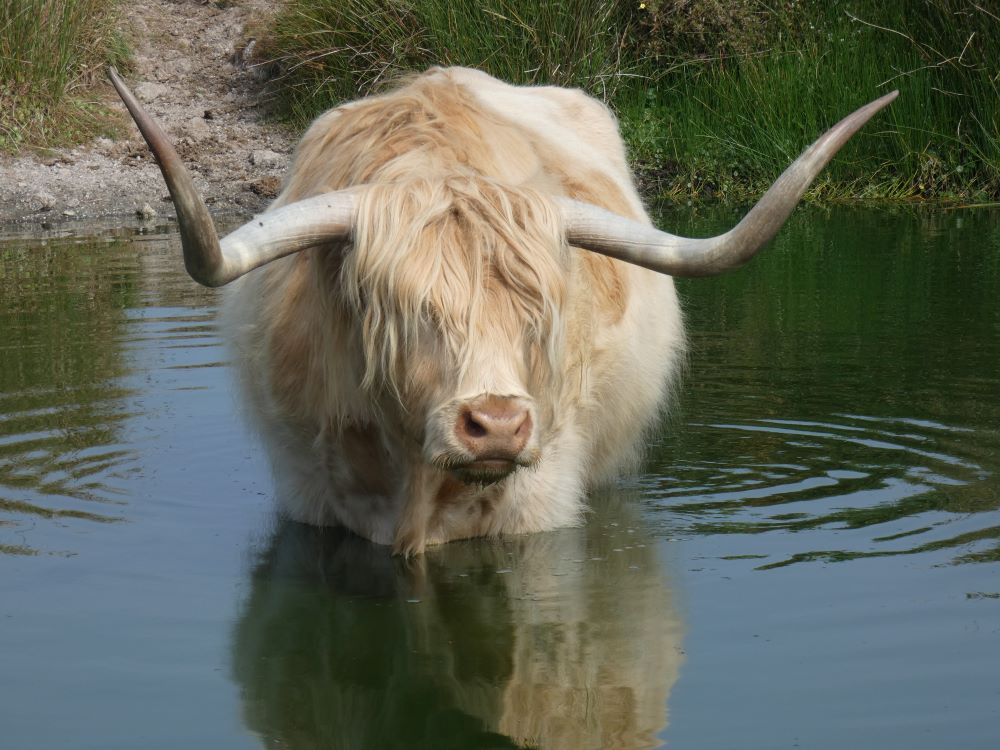 A reminder to stay cool in the heat! Thomas Weston
Eleanor joined and it was going well with the Lundy breeding adult female and her young Spotted Flycatcher caught and ringed, another two Lundy-born Blackcaps, more Wrens(!), and a couple more Linnets too. We decided to pack up and undertake census with a slightly later start time. Census was good and included multiple heard only records of the Great Spotted Woodpecker in the Valley. We believe it to be a different bird to the one last week but we are certainly not sure as it sounds the same and I have not seen it well yet. There were birds in bushes but not much out to sea. Benjamin's Chair held a feeding frenzy of Gannets, Manx Shearwaters, and a Sand Martin overhead, but overall it was quite calm out on the water. Passing through the Airfield and over to Quarry Cottages, there were flocks of Linnets, small flocks of Wheatears, and a nice mix of breeding Meadow Pipits seen. Pushing it for time getting back into the Village before 11am but a few flocks of Starlings and House Sparrows later we made it!
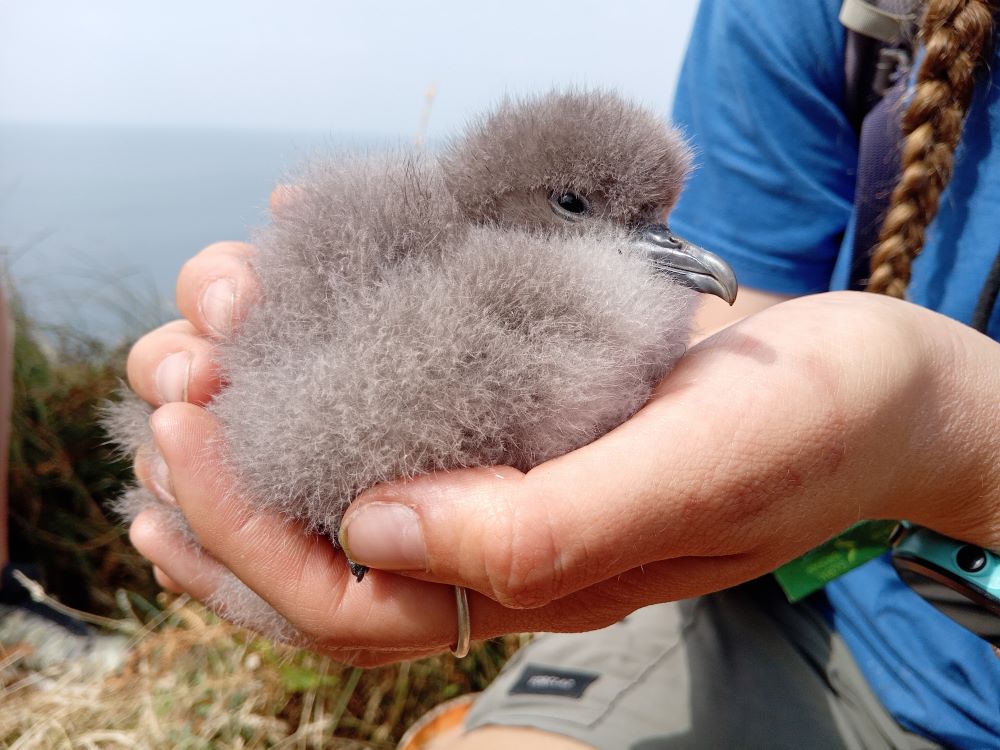 Manx Shearwater chick! Our youngest of the box birds...
Later on, Manx Shearwater nestbox checks saw the smallest of the chicks becoming a lot bigger now and the biggest gaining weight quickly!
An afternoon of admin awaited, whilst Tara, Jessie and Chloë were out and about searching for any early seal pups. Meanwhile Eleanor was in the Tavern but got some much needed time outside and Lucile was keen to catch some Starlings and House Sparrows but alas no success today.
18/07/2026 – Labyrinth Chicks!
By Jessie Dermody
My first activity of the day was visiting the island's newest residents: four young Chickens! They have been named Morag, Ludo, Ambrosius and Mr Diddlemus, all (except Morag) after charecters in Labyrinth. We are trying to handle them lots, with the hope that they will grow up to be freindly. They are very sweet and fuzzy, although they have not warmed up to humans yet. After we had cuddled the chicks, I headed up to the north end of the island to complete a seal disturbance survey.
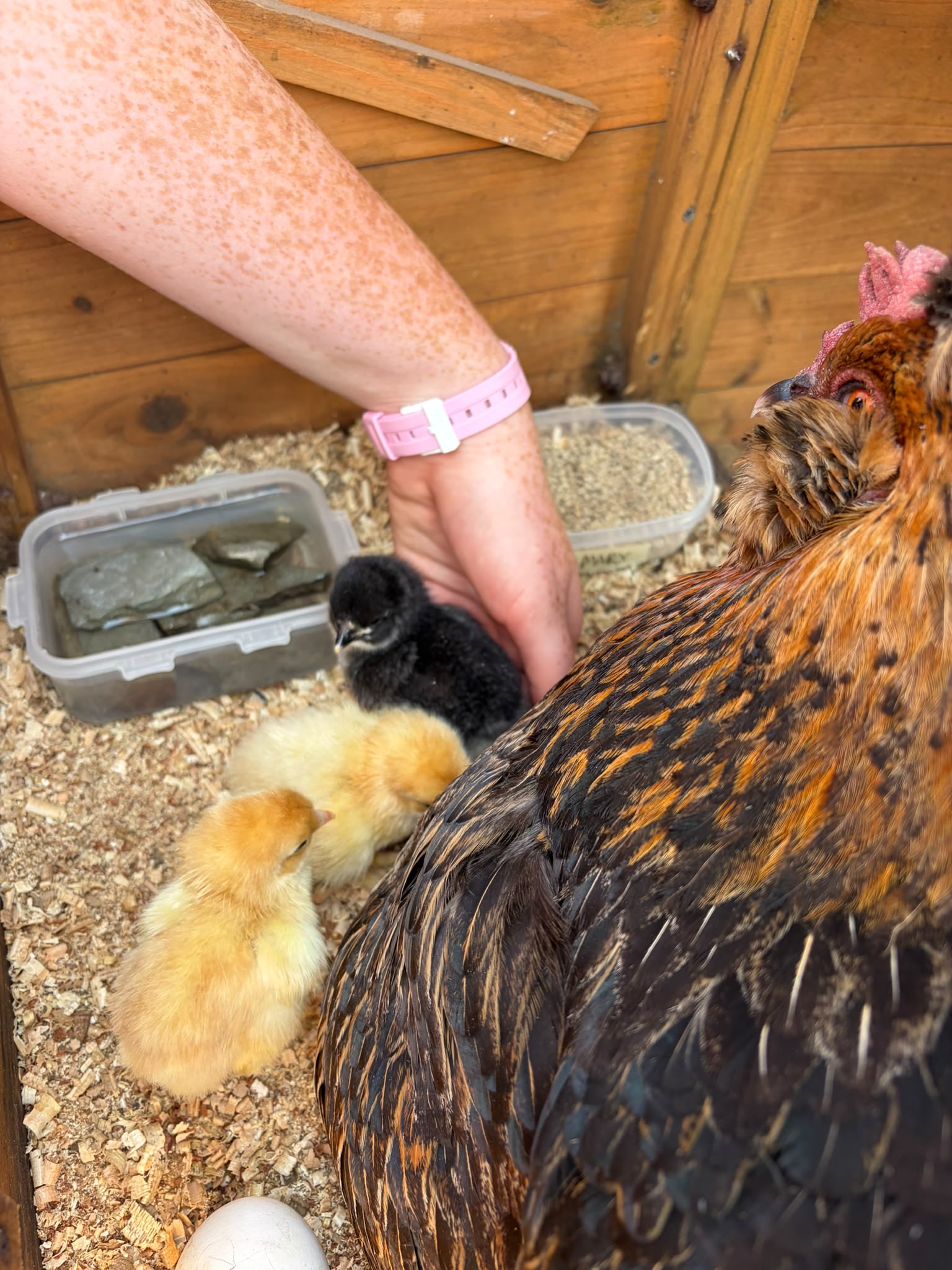 The new chicks, (bottom to top) Mr Diddlemus, Ambrosius & Morag with their mother 50/50. Photo by Chloe Langmead
On my walk over I spotted a Clouded Yellow butterfly over the airfield. There are a lot of butterflies visiting the island at the moment! I also saw 3 Common Blue butterflies, a species that has not been present in high numbers on the island so far this year. Another species that I have not been seeing around as much recently also appeared on this walk, as a Kestrel was hovering near Tibbetts hill.
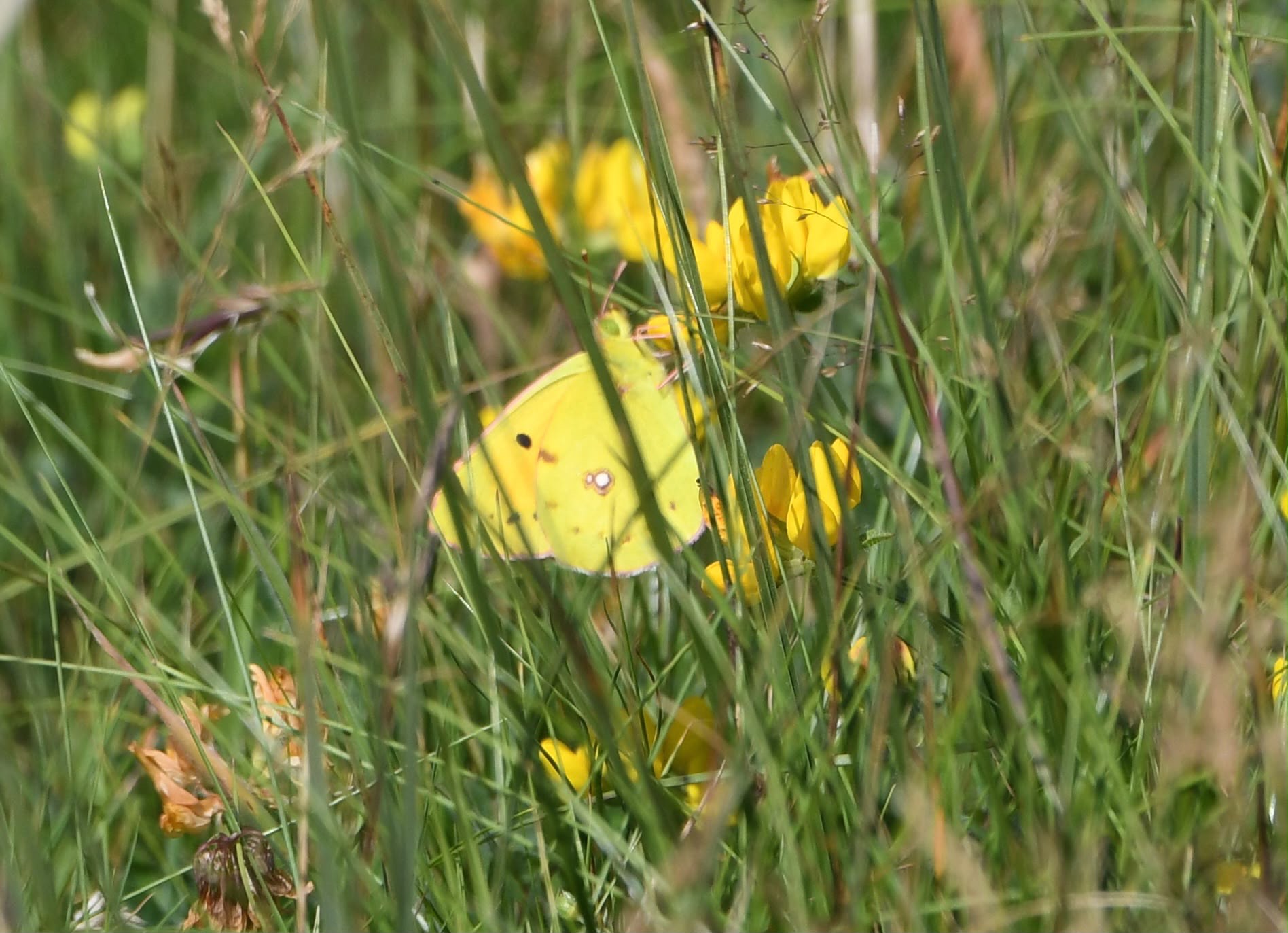 A Clouded Yellow butterfly - by Greg Lee
Nine seals were resting on the rocks visible from the seal survey spot. Unfortunately, they all stampeded off the rocks into the water shortly after I arrived, scared by a passing boat that came too close, too quickly. It is very troubling how often the seals here are disturbed to this level by boats, snorkellers and divers. Thankfully, this time most of the seals stayed in the area and returned to the same rocks later on.
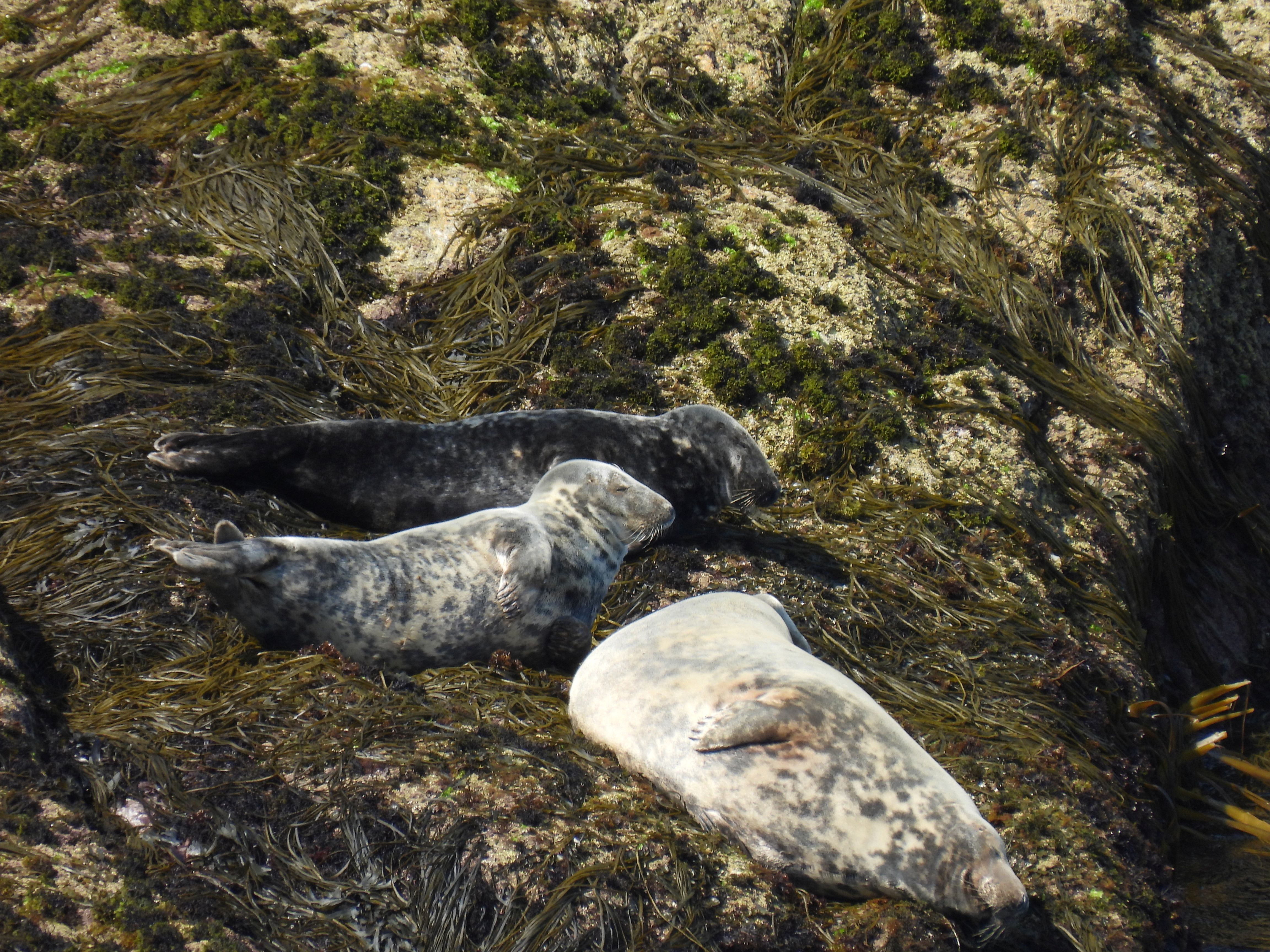 A male and two female seals safely returned to the rocks after being flushed into the water. One of the females appears to be melting, whilst the other is banana-ing. Photo by Jessie Dermody
During the disturbance survey I noticed four Gannets a little further out. Gannets are not as common as you would think around the island, but I always keep an eye out in case there are any ceteceans beneath them. There were no signs of ceteceans today, but the birds stayed nearby for the survey and I watched them dive a few times. There were also a total of 15 Shags in the bay, a mix of adults and juveniles. The teenage Herring Gulls and Shags were out in full force, annoying their parents and generally being cute. I counted seven juvenile Herring Gulls, and only one juvinile Lesser Black-Backed Gull, although there were four adults around.
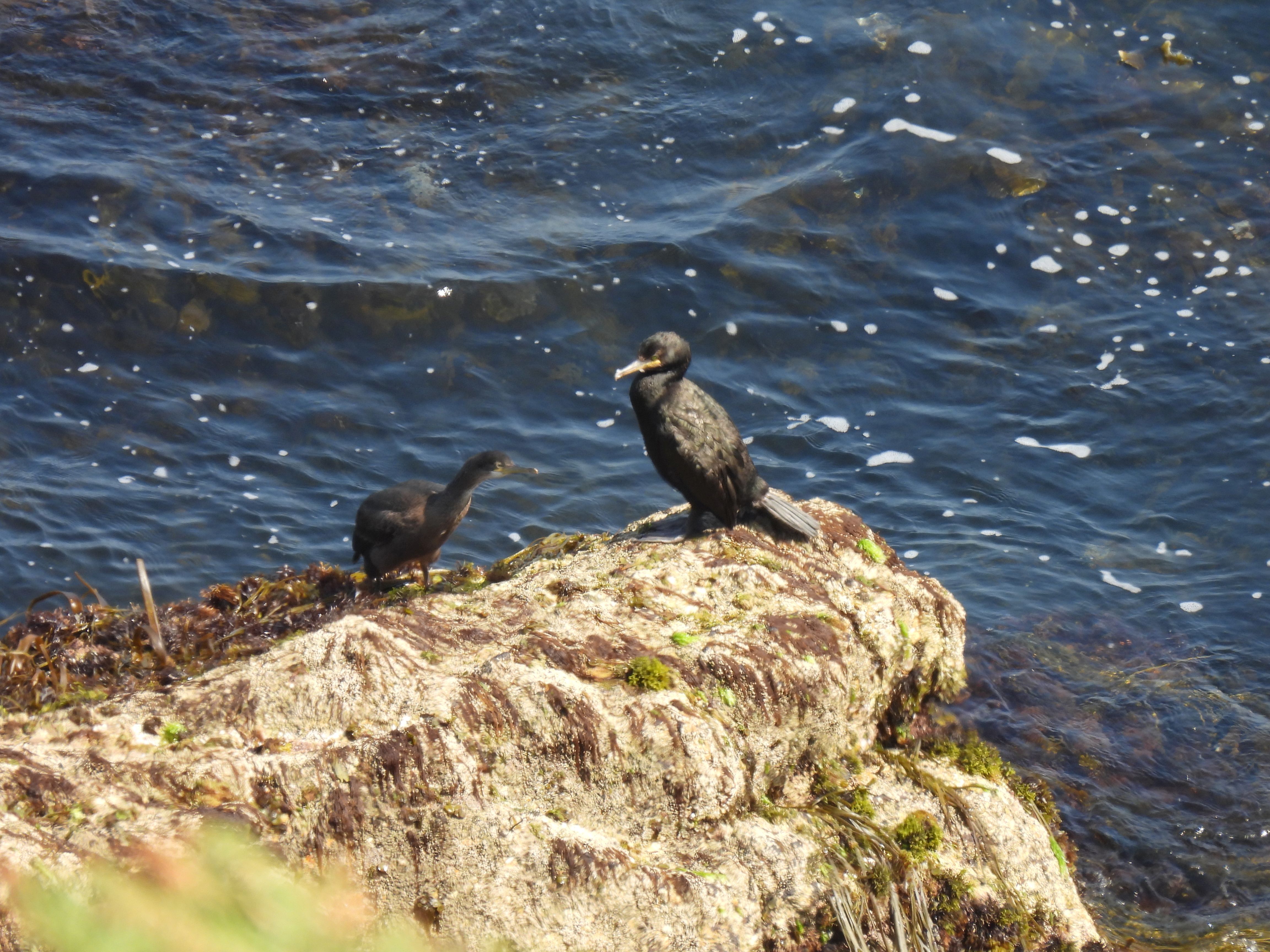 An Adult and a Juvinile Shag - by Jessie Dermody
After I finished surveying, I headed along the lower east path for a swim at Quarry Bay. This beach will be closed soon, as it will be seal pupping season, and this beach is very popular with the mother seals. I am trying to swim there as often as possible before the pups come, as it is a great snorkel site. We finished the day watching the sunset to celebrate the birthday of one of the volunteers. It was a beautiful sunset! We then moved to the Tavern to sing musical numbers until 2am.
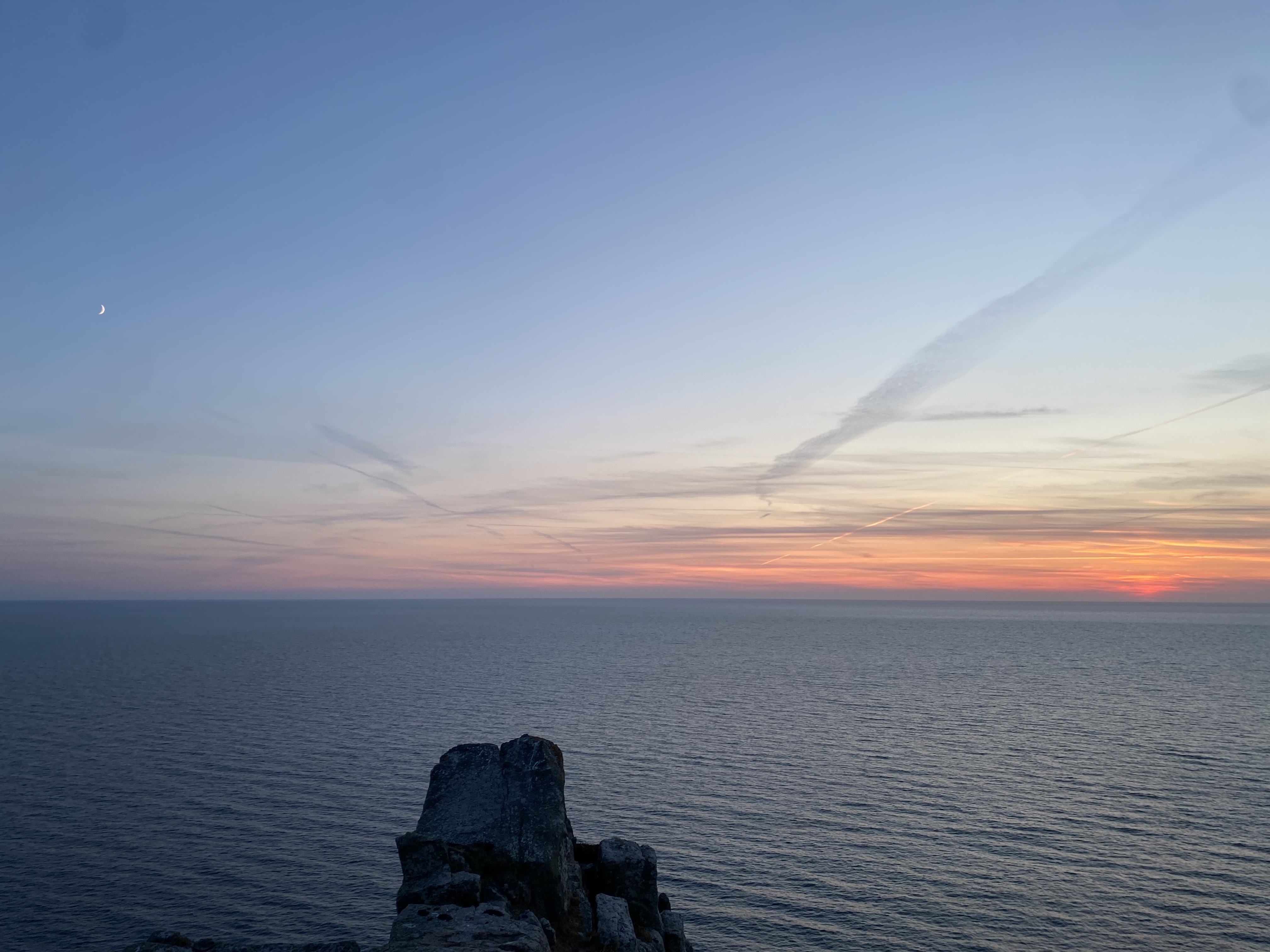 Sunset from below Old Light - by Jessie Dermody
17/07/2026 – No Day Off for Migration
By Thomas Weston
The morning started at 5am.
 Sunrise this morning!
Eleanor and I woke up to get ready for a ringing morning. We descended down to Millcombe as the sun was rising and opened a few of the nets. There was a warmth in the air and the sun was strong again.
The first round was really nice, we caught a couple of fledged juvenile Robins and there was the sound of a Great Spotted Woodpecker in the trees above the Gas Store. The birds kept coming and so did the Conservation Team, aptly Greg and Lucile who joined. There were a couple of new Wrens; a brood of ringed Wrens who we were lucky to ring in the nest as it was in a wall; a Linnet; a Song Thrush which was the most unusual as our 'usual' male was still singing; and a new juvenile Dunnock too. However, the main aim for the ringing was to see if there were any migrants coming through. This date in the past couple of years has been the start of Willow Warbler passage and it was no different today with 28 birds proccessed including a couple of retraps from the spring migration period as well as a known breeder too! The only other true migrants were 2 Sedge Warblers both of which were juveniles from elsewhere. There was one Lundy breeding adult Chiffchaff mixed in and even a family party of 3 Blackcaps with one adult in moult, the adult male not, and a juvenile too – neither species migrating just yet but both will soon become regular blog features no doubt.
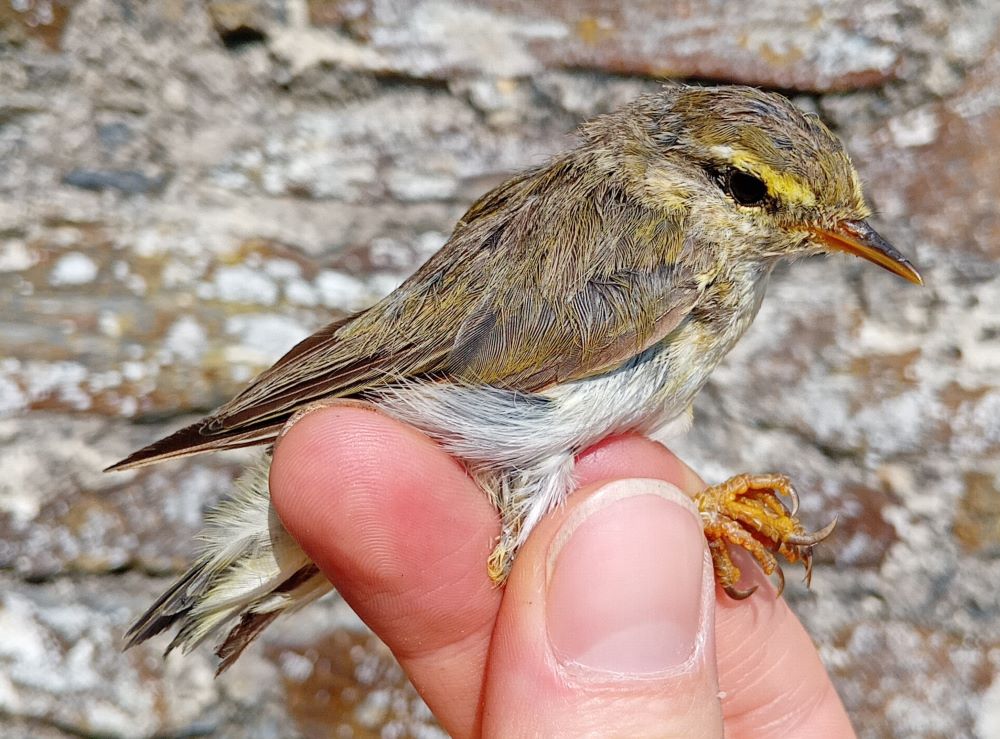 Adult Willow Warbler caught and ringed in Millcombe. Thomas Weston
 Wing moult of the adult Willow Warbler above. Thomas Weston
The adult Willow Warblers caught were all in active wing moult and were certainly not migrating yet!
A more chilled day off was had with a walk up from Old Light to Aztec Bay and then back via Pondsbury in the afternoon. This resulted in the highest Puffin count of the year with 552 noted in small rafting flocks - a bit odd as these are usually the first to leave but it seems they are the last of the auks to leave this year! There were about 100 Guillemots and a small flock of Razorbills noted too. The West Coast was buzzing with moths and butterflies. It was amazing to see above 1000 Silver Y's present up to Pondsbury, as well a plethora of butterflies including 3 Clouded Yellows. On the way back, flocks of Linnets were frequently found and the area around Pondsbury was nice to explore as it seemed nobody had been there recently. A flock of 6 Mallards on the water, a Sedge Warbler in the bushes and nice views of Blue-tailed Damselfly and 2 Emperor Dragonflies.
16/07/2026 – Grasshopper Warblers arrive
By Emma Abel
Today's census was a good showcase of what autumn is about to bring us. Greg headed out on yet another clear sunny day, and was treated to the first few Willow Warblers to stop by Lundy on their passage returning south, with 13 birds seen hopping around the foliage of Milcombe feeding themselves up. These birds are looking especially lovely at this time of year, fresh and lemon yellow.
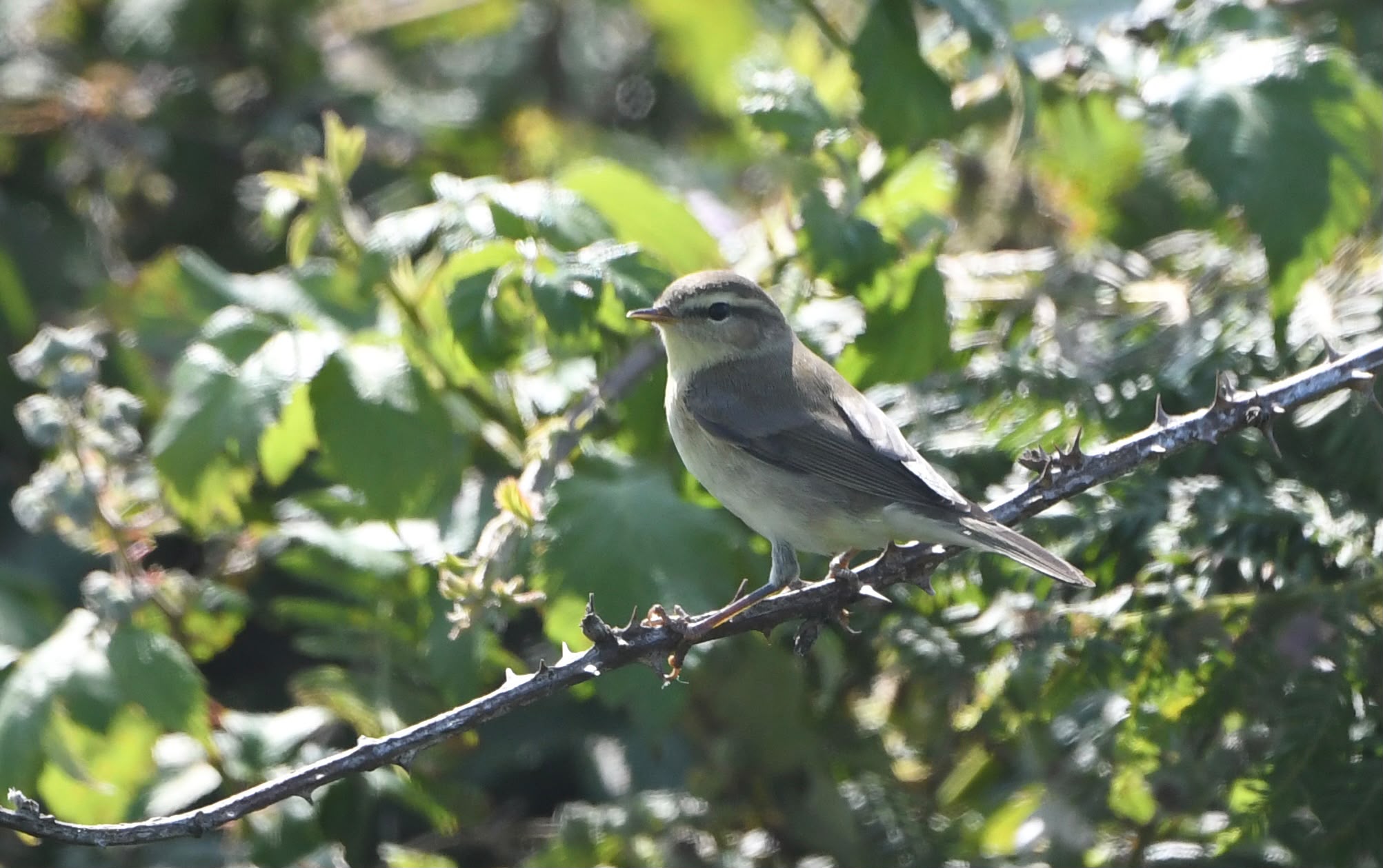 Willow Warbler by Greg Lee
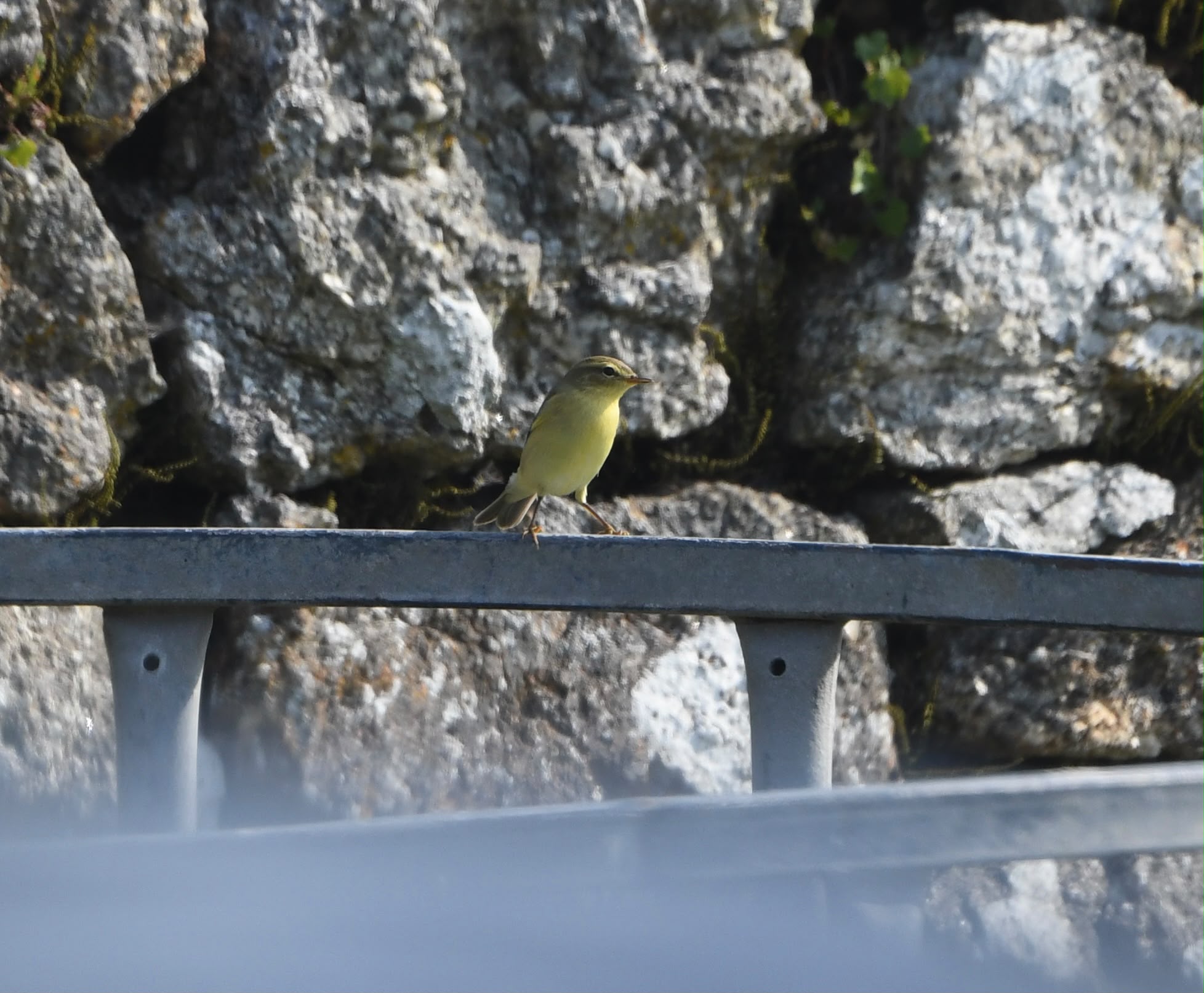 A fresh lemon yellow Willow Warbler by Greg Lee
Willow Warblers were not the only migrant on their way past. A Sedge Warbler was seen near Brambles followed by another flushed out of the bracken near Pointless Wall. Excitingly, two Grasshopper Warblers also were hiding among the bracken. A third Grasshopper Warbler joined a Willow Warbler in the garden of Stoneycroft, taking cover in the only tree in the local area and sitting still for long enough for a speedy picture.
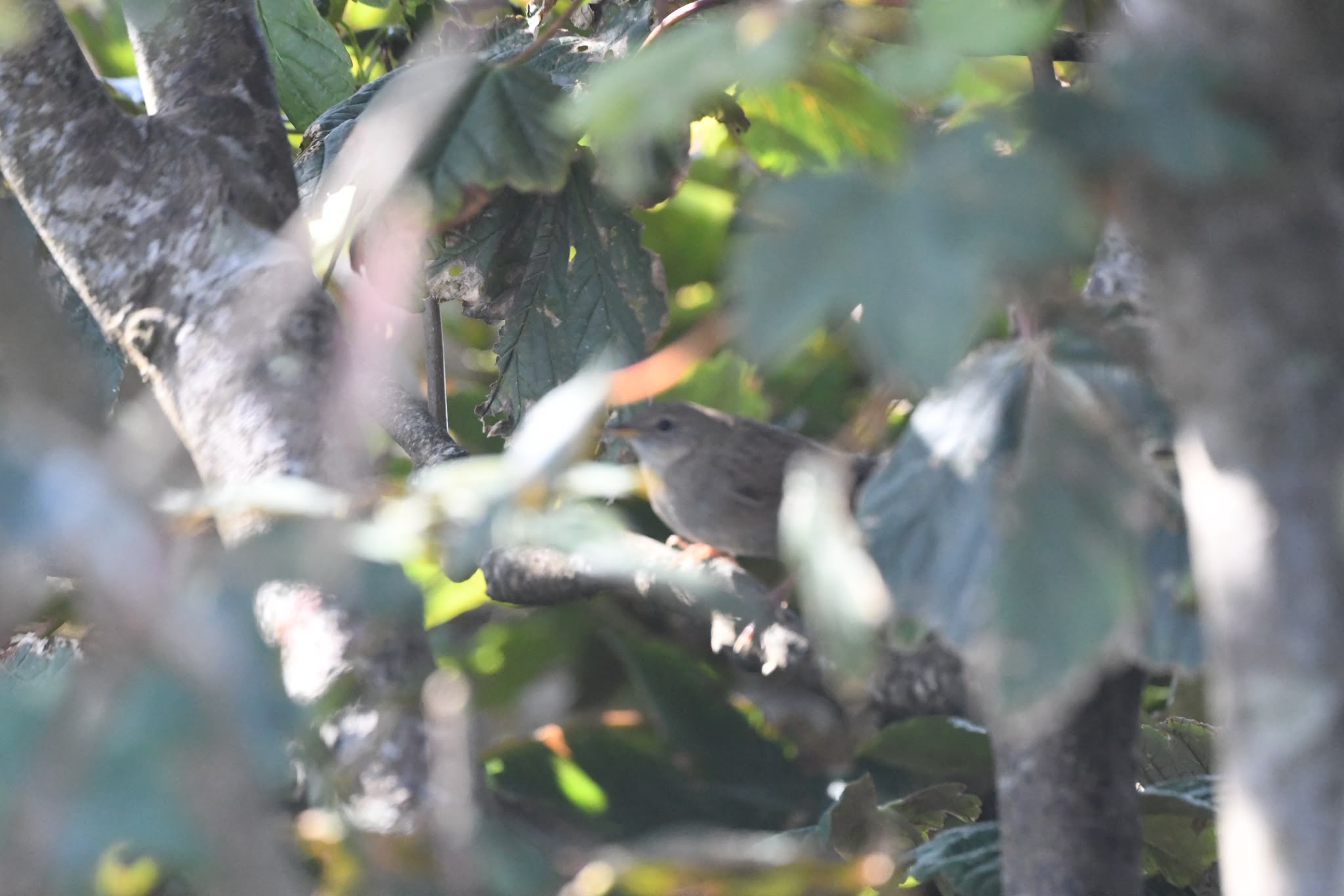 Elusive Grasshopper Warbler at Stoneycroft by Greg Lee
Higher in the sky were more migrants passing by Lundy for a service station snack on their long journeys. Two Swifts and a Sand Martin were wheeling over Tillage Field in the acrobatic display of collecting their dinner.
Our resident birds were also out and about making the most of the continuing clear weather. Three Kestrels were out hunting across the island and four Peregrine Falcons were seen, including juveniles, pestering some Ravens.
I had a Puffin filled day, starting with productivity monitoring at Jenny's Cove, where quite a few pairs seem to have stopped coming back with Sand Eels. As it has been over 40 days since the first adults were seen bringing fish back to feed their chicks, we can assume that some of these earlier breeders have successfully fledged chicks and headed out to sea with their young. Despite the quietening cliffs, with just over 1000 Guillemots and only 15 Razorbills seen, the remaining Puffins are still busy ferrying Sand Eels back and forth to fatten up their chicks before their big jump down into the sea. The non-breeding adults that have been wandering around the cliffs, popping in and out of burrows and prospecting for next year, have stopped visiting the cliffs at Jenny's and are choosing to raft out on the water. As I headed to the Battery this afternoon to set up for Seabird Station, I wondered if there would be much to show people. However, I was pleasantly surprised to find 346 Puffins rafting on the water, bobbing around and showing well in the scope. The views improved as the afternoon wore on, with many birds flying up, circling close by and landing along the cliff, putting on a good show for those who braved the Battery steps hoping for a glimpse of these beloved birds despite the prospect of a sweaty ascent.
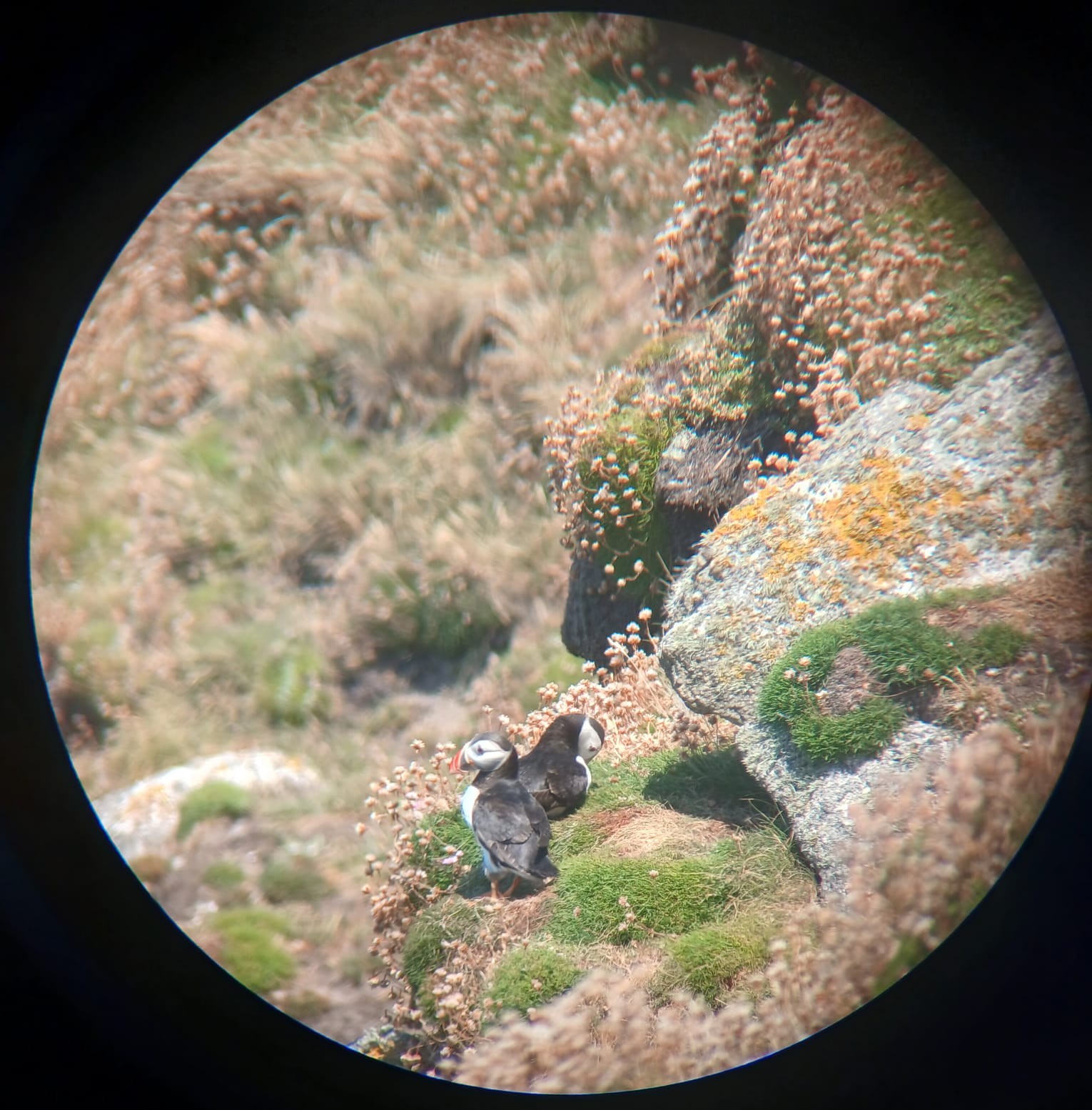 Puffins spied through a scope by Emma Abel