




Bird Sightings
01/07/2026 – Lundy Cabbage Flea Beetle Special
By Emma Abel
Today a team from Buglife came over to train up the conservation team in surveying the Lundy Cabbage for presence of the Lundy Cabbage Flea Beetle. This species is well-renowned for being the only endemic species reliant on another endemic species in the UK, requiring the Cabbage for all of its life stages. Starting in Millcombe, we looked for specimens of Lundy Cabbage, many of which had the distinctive damage to the leaves caused by the rare beetles. Once given a brief talk about the key features of our target species, mainly the bronze colouration to the body and powerful legs for jumping, we were ready and armed with sweep nets and hand lenses. As Lundy Cabbage is such a rare plant, we carried out this survey technique with permission granted to disturb the plants, using careful sweeps to not damage them.
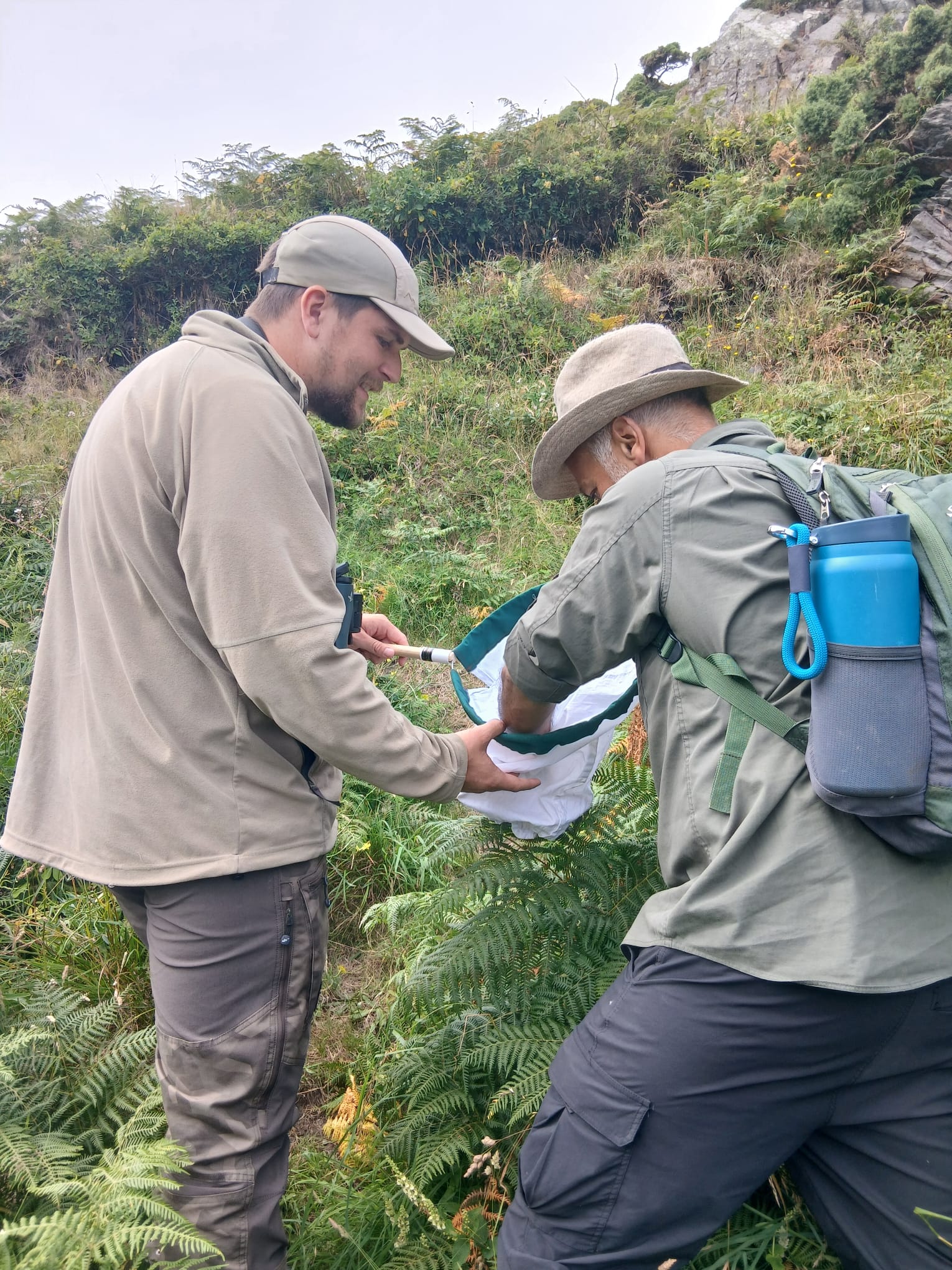 Sweep Netting Lundy Cabbage by E Abel
It didn't take long for a beetle to be swept, though this was a different species, with a distinctive "go faster" stripe going down the body. Rather incredibly though, it wasn't a net that delivered the first Lundy Cabbage Flea Beetle, but the sharp eyes of Greg, who spotted one going under a leaf on one of the cabbage plants. However, as the specimen was potted up and an attempt to transfer it to a smaller pot was undertaken, the beetle showed why it has flea in the name, and pinged itself with a mighty jump into the ether. The next beetle to be found was another of the flea beetle species that could be confused with our target beetle, with a more blueish black body. What followed was a very successful session, with double-figures of the beetle being found by the Conservation Team, and after finally getting the hang of transfering into pots, we all got great views of this rare beetle. Tara and Chloë got to use an extendable net pole, increasing the reach of our cabbage sweeps, using the pair-sweep technique for maximum reach. The only temporary distraction from the birds was the lingering Great Spotted Woodpecker that caught Greg's ear. Over the summer, we hope to continue to survey the plants to get a further insight into the population and movements of these exciting insects.
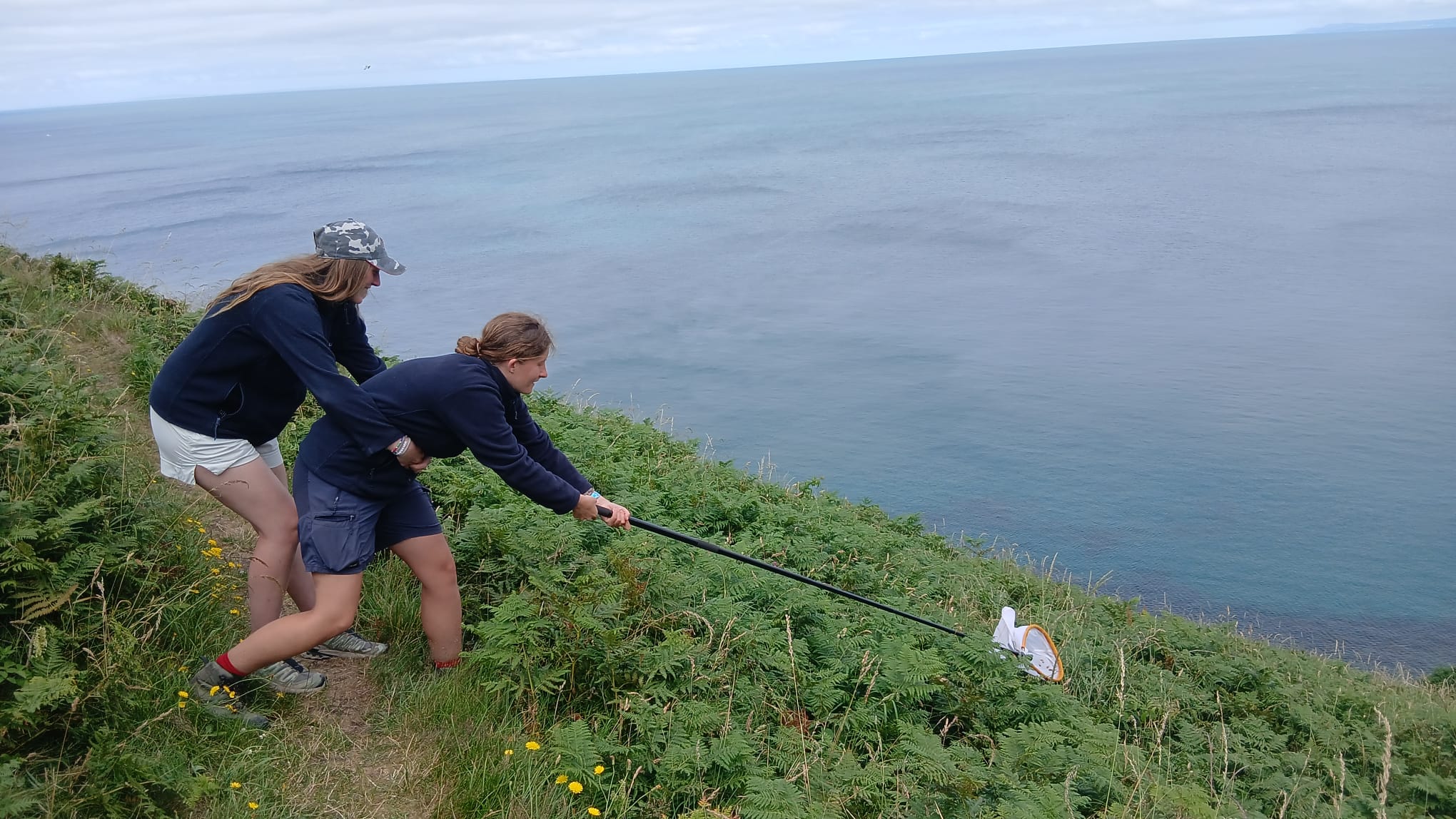 The joys of an extendable net pole by E Abel
Elsewhere around the island a visiting group of ringers were having a successful time out finding Shag nests for a colour ringing project. Along with very fuzzy but stinky Shag chicks, they also found Herring Gull chicks (possessing a similar odour) and some Razorbill chicks.
30/06/26 – Save Our Seals!
By Jessie Dermody
A busy day for me today, beginning with a trek up to the northeast of the island to monitor the Fulmar colony. I set off a little later than I had planned, so I walked as fast as I could and scrambled down through the bracken to the survey point. I counted 52 Fulmars sitting in the colony, with another four on the wing. No visible chicks yet, although there was a Great Black-backed Gull with a chick on top of the rock above the colony. We have also spotted a Peregrine chick outside its nest in this area too! My job was to photograph the monitored sections of the colony so Emma can do a proper nest count at a later date. I also get a general count to go into the log book for that day. After my task was completed, I headed back to Gannets' Bay for a seal disturbance survey.
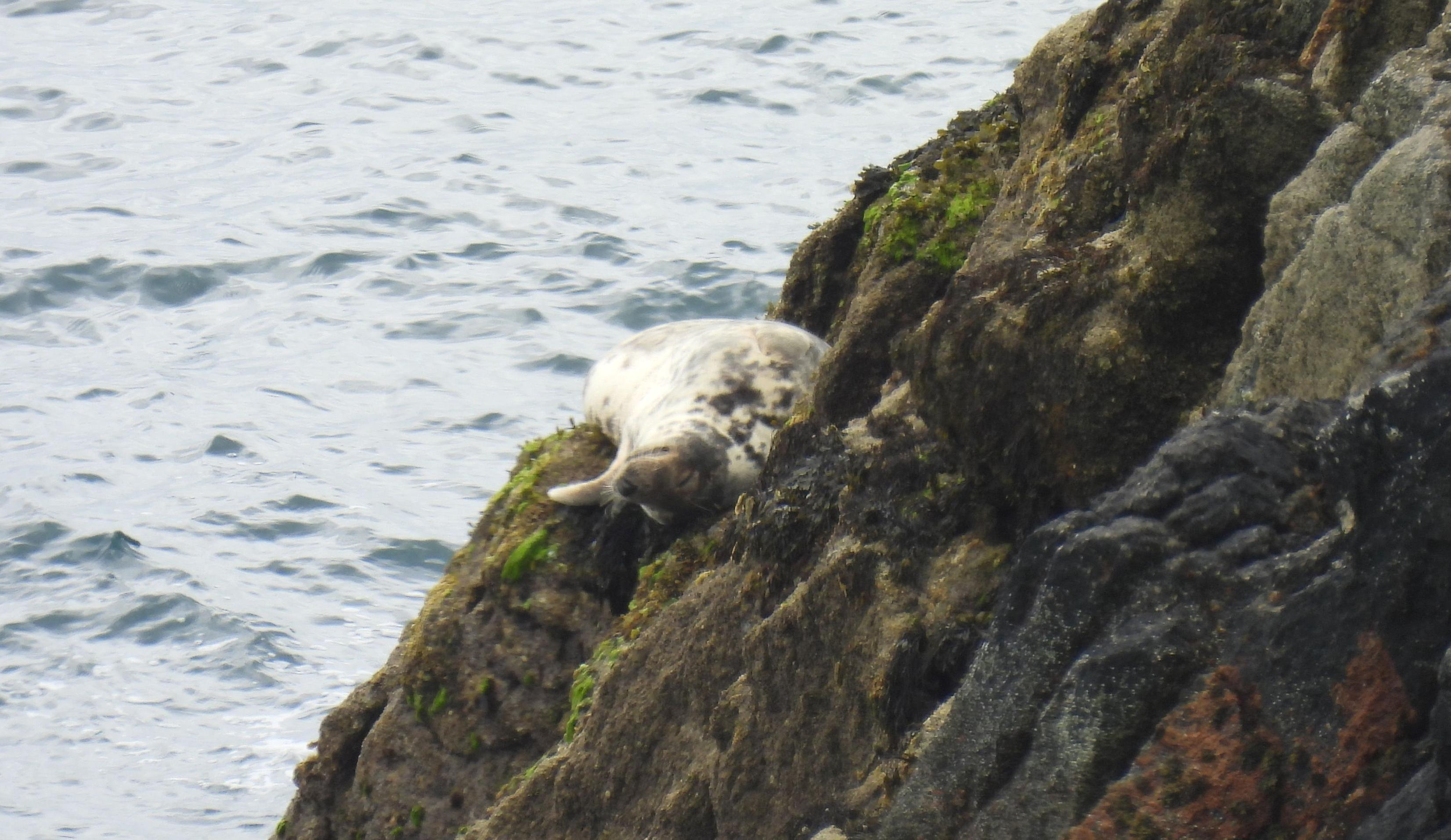 An undisturbed seal resting 100m from any boats or snorkellers. By Jessie Dermody
Unfortunately, there was a lot of seal disturbance today. Two boats moored in Gannets' Bay and sent out snorkellers and divers who seemed to not know how to snorkel with seals without disturbing them. There were several instances where seals were scared off the rocks by swimmers coming too close, as well as many seals which were prevented from hauling out by the people and boats in the water. In the screen capture below, you can see a very disturbed seal looking directly at the snorkellers. A few seconds later in this video, the seal moves rapidly off its rock into the water, wasting valuable energy as it will now have to search for another place to rest. As I mentioned in a previous blog post, disturbing seals while they are hauled out can have very serious and long-lasting effects. Disturbing female seals during summer can be particularly bad, as they may be pregnant at this time of year, and any disturbance will waste energy that they would normally have used to feed the pup inside of them.
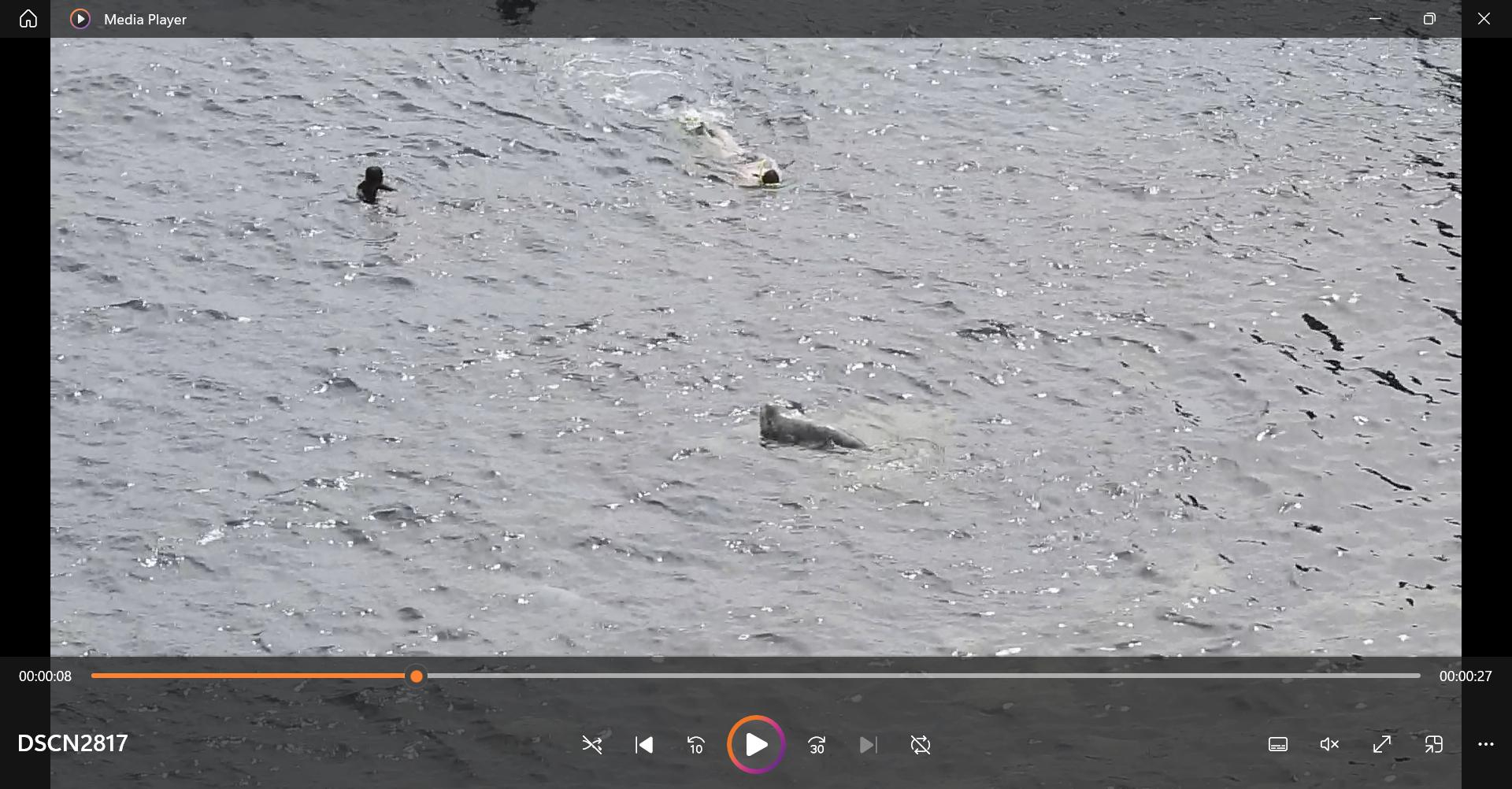 A screengrab of one of the videos of seal disturbance taken today.
After draining my camera battery filming incidents of seal disturbance, I made my way to Jenny's Cove to run the seabird station for visitors there. A lot of the visitors today were very excited to see the island's auks up close through the scope. A few of them spotted some Ravens flying past the cove! There were also plenty of Fulmar and Kittiwake flying around the cove today. As 3pm rolled around, I headed back to the Lodge to crash on the sofa and read before dinner and wildlife log in the evening. We had reports of 285 Manx Shearwater, 4 Gannets, 2 Black-headed Gulls, 5 Storm Petrels, 12 Curlew and a Cormorant on today's Oldenburg crossings (though not all within the Observatory recording area, which is within 30 minutes of the island). We have also had at least one Grayling butterfly reported at log for the past few nights.
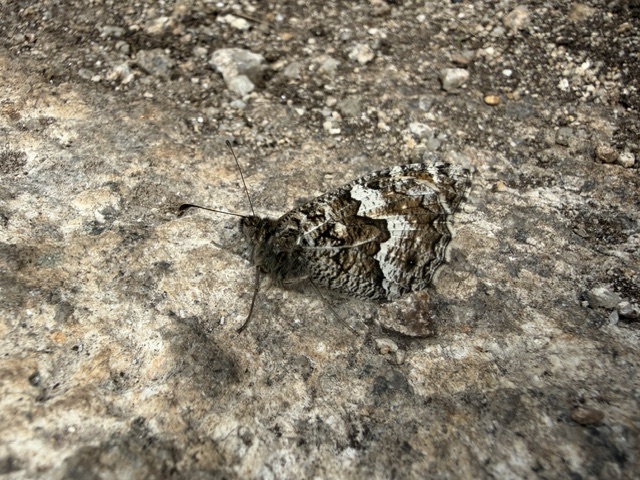 Today's Grayling. Photo by Chloë Langmead
29/06/26 – Bins out and Fins on!
By Chloë Langmead
Hello everyone, I hope you had lovely weekends :)
It’s been a busy day today! We have had the first sightings for the year of Mistle Thrush and Great Spotted Woodpecker today as well as a Reed Warbler singing in Millcombe.
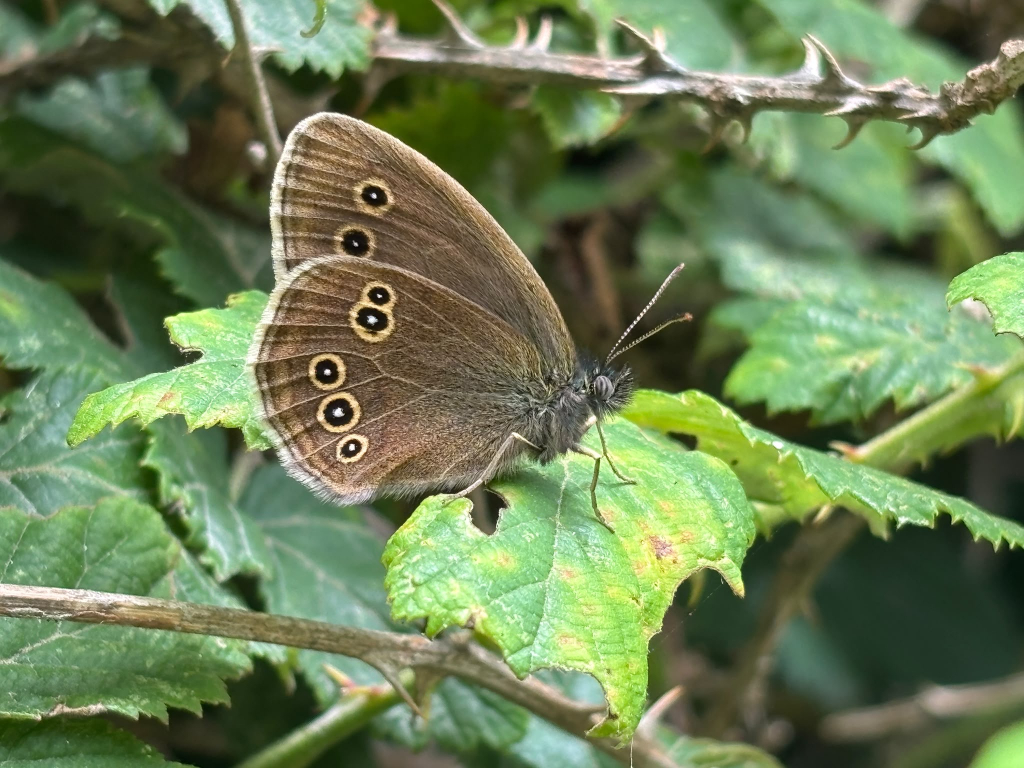
Jessie and I started our morning with a Bee Walk. However there weren’t many bumblebees to be seen, our total for the transect were 2 Common Carder and 1 Buff-tailed. In contrast, the butterflies and moths have been out and about today, Emma and Greg saw 137 Meadow Browns, 5 Ringlets, 69 Painted Ladies, a Grayling and 4 Burnet moths.
After the Bee Walk, Jessie and I headed straight down to the Landing Bay and met Tara for our snorkel safaris. We had two great sessions, during which we saw lots, including two beautiful Doto spp. Sea Slugs and a Boring Sponge. There were also so many Moon Jellyfish bumping about.
After the two snorkel safari sessions we were all pretty cold, but we soon warmed up as we kayaked, paddle-boarded and swam out to deploy the BRUV. This time we repositioned and angled the BRUV so that it was closer to the ground (a temporary fix until Ian kindly permanently adjusts it for us) and we crushed the bait up a bit more before putting it in the canister. We positioned it in the seaweed and while we have yet to thoroughly review the footage to identify all the fish species, we did have our first BRUV sighting of a curious Grey Seal who came to have a nosy!
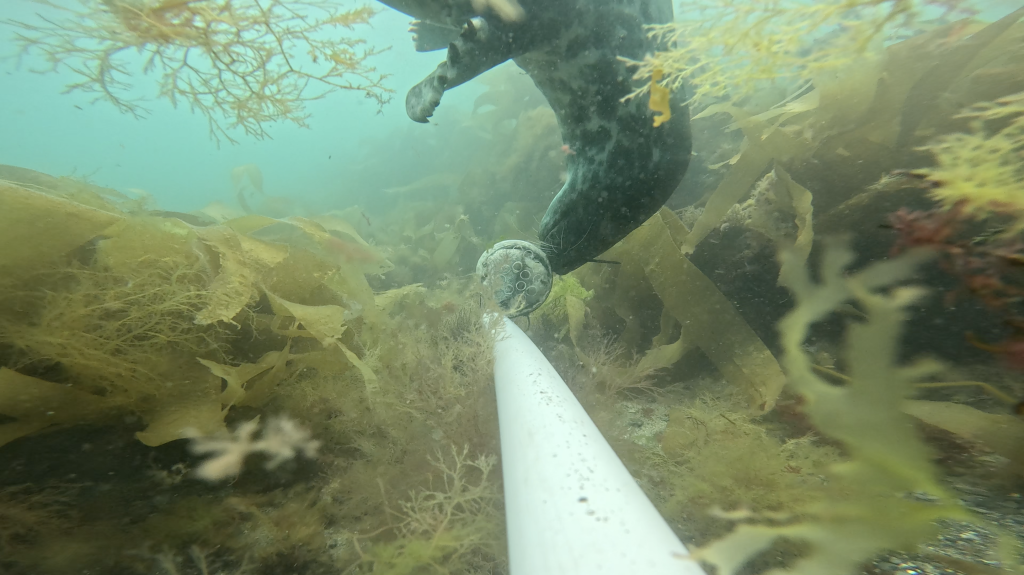
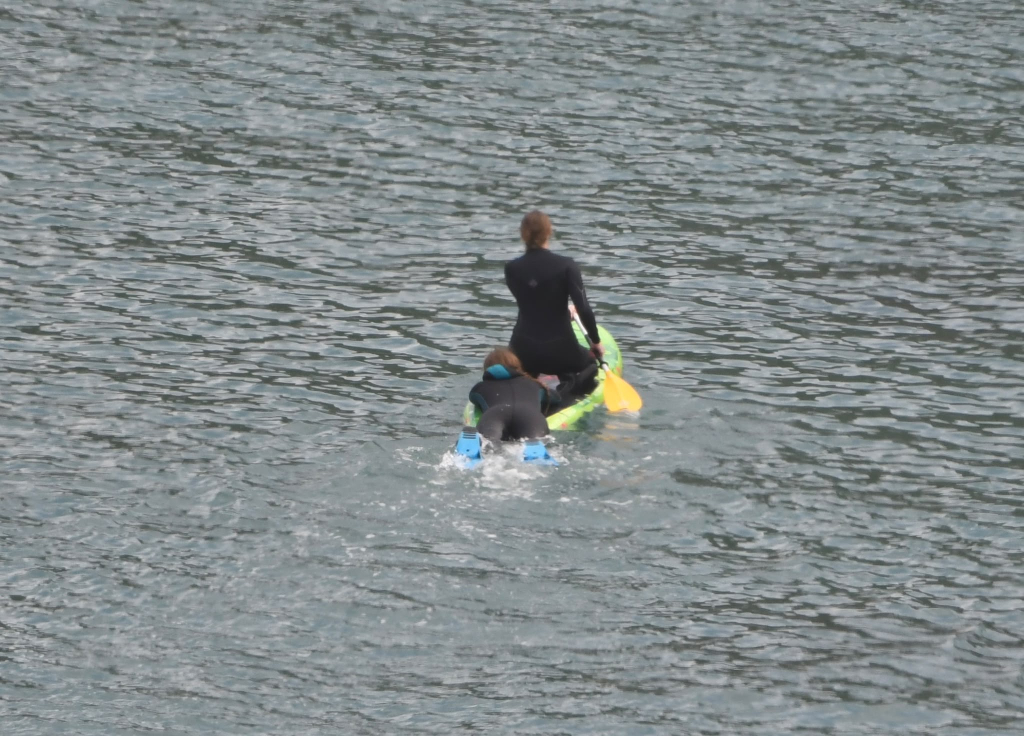
Chloë and Tara deploying the BRUV on a paddle-board. Photo by Greg Lee
28/06/2026 – Lundy Half Marathon
By Simon Parker
A special day on Lundy as a boat full of runners was deposited at the landing bay before heading up the steep climb to start the 2026 Lundy Half Marathon. I've known about this race since I started here in January, much talk has been had surrounding tactics and how to survive the particular perils of running Lundys trails. Running is one of my main hobbies so I was eager to join in with the fun, six people from the Island took part this year, Me, Tara, Ian, Sarah, Becky and Pete. After some tactical carb loading the night before, the morning consisted of us all lounging around the village prepping and trying to calm Pete's enthusiasm. Mercifully, the heat had dropped off from the savage high temps that dogged the beginning of the week although it still felt like a furnace on the sheltered East side. Lundy race is hard, there's no sugar coating it, I've ran a lot of races in the past and Lundy ranks up there as one of the toughest. Lots of annoying elevation, steps and steps and steps, technical East track with bottlenecks, and wind, always a headwind.
Fuelled on by Jelly babies, pineapple and fizzy water (questionable choice) I actually felt pretty good and flew round the first half, fatigue crept in on the West and by the time I was on the main track home I was starting to will it all to be over. Pre-race chat on the Island had put me down as one of the race favourites, In the end I finished in a respectable 6th place, something to build on next year! The whole Island team did well with Ian and Tara racing each other to the finish, Pete shaving over 10 minutes off his last effort and Becky coming in as one of the fastest females. Notable mention to Sarah who completed and did absolutely zero training after being peer pressured at the last minute.
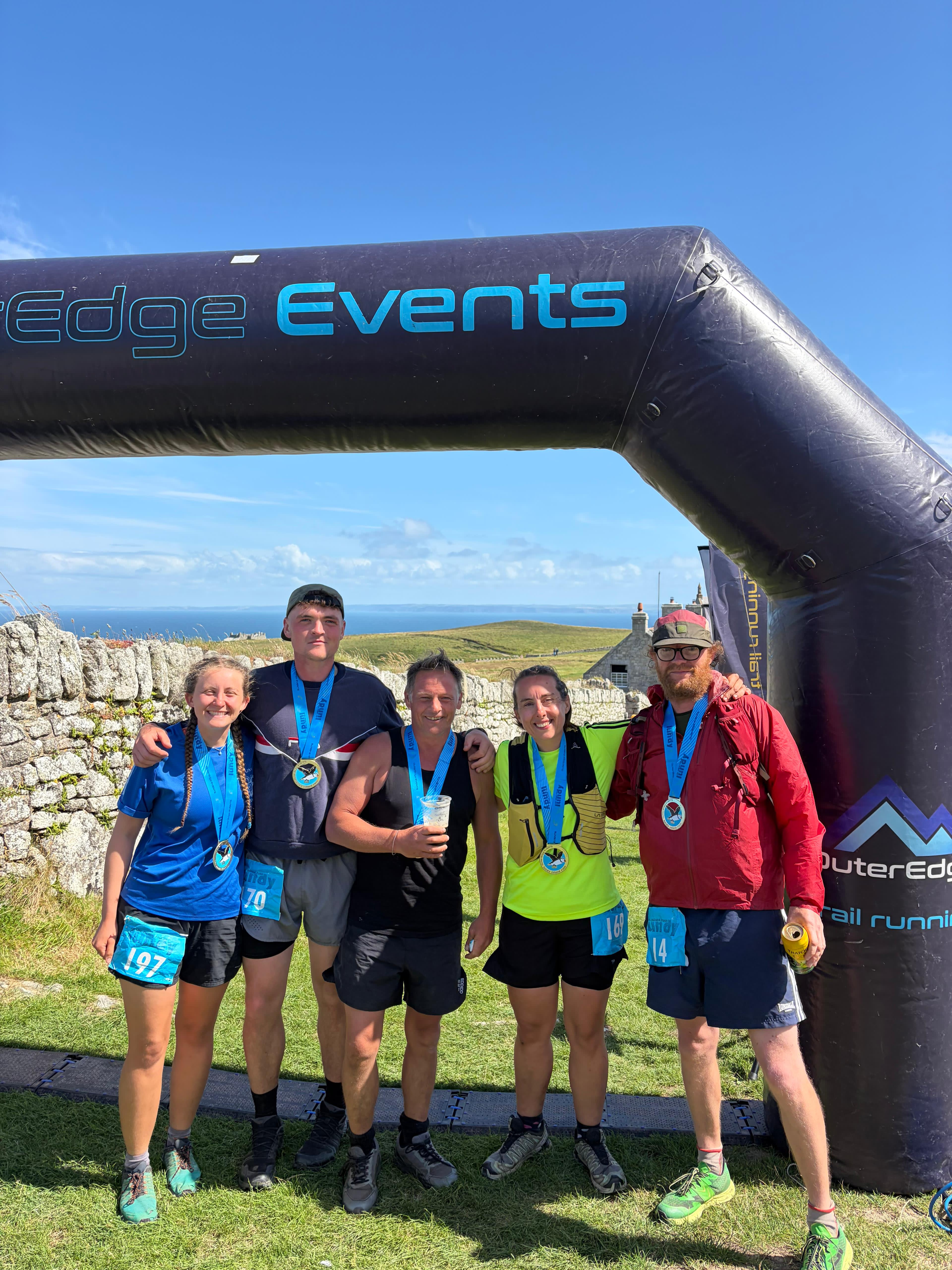 Claiming the title for "Most Colourful Shoes"
As the crowds shuffled back to the Oldenburg to make the crossing back to the mainland, the weather shifted to a strange cold wind which brought in the cloud and ruined the staff barbeque. A classic British BBQ event with everyone retreating indoors as the rain started.
In wildlife news... There were some notable entries in the logbook including 60 Shag and 23 Juvenile, this is from the newly arrived Shag colour ringing team who are looking to find as many juveniles as possible to start collecting data on our Shag population. 100 Puffin were entered and a singular Kestrel, the Sparrow population is increasing steadily with a new ringed adult recorded on a camera trap taking the total to 30 adult birds. A lone Buzzard which seems to have wandered over to check out the landscape was also seen getting chased by Crows just off the South.