




Bird Sightings
10/07/2026 – BRUV and Bioluminescence!
By Jessie Dermody
My morning began with a short walk over to the Castle to join a seawatch organised by some volunteers from the mainland! The Sea Watch organisation has a large network of volunteers who regularly survey for cetaceans from land, and these two volunteers in particular visit Lundy every year to run a series of watches. Unfortunately, there were no cetaceans around this morning for us to record. We did, however, spot four Gannets, a Peregrine and a Kestrel.
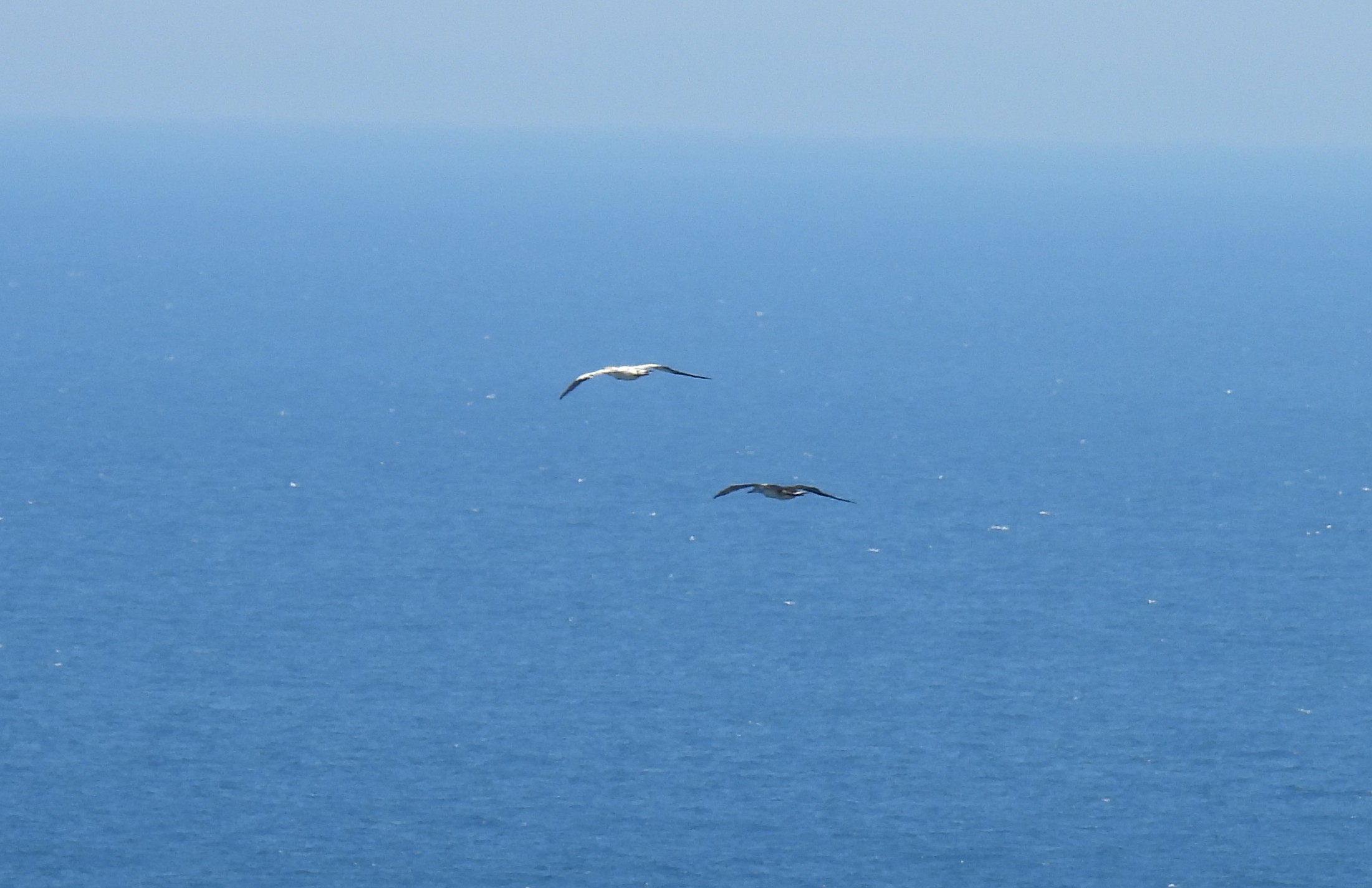 Adult and juvinile gannets on the wing. Photo by Jessie Dermody
After some lunch and admin in the tavern, Chloë and I headed to the landing bay for a BRUV deployment. We dropped the BRUV on the north side of Rat Island, right on the edge of a rocky reef with lots of kelp. During this hour-long deployment, we recorded five fish species, three cnidarian species and a lobster! I was able to identify some seaweed species in the footage: Mermaid's Tresses, Forest Kelp and Wireweed.
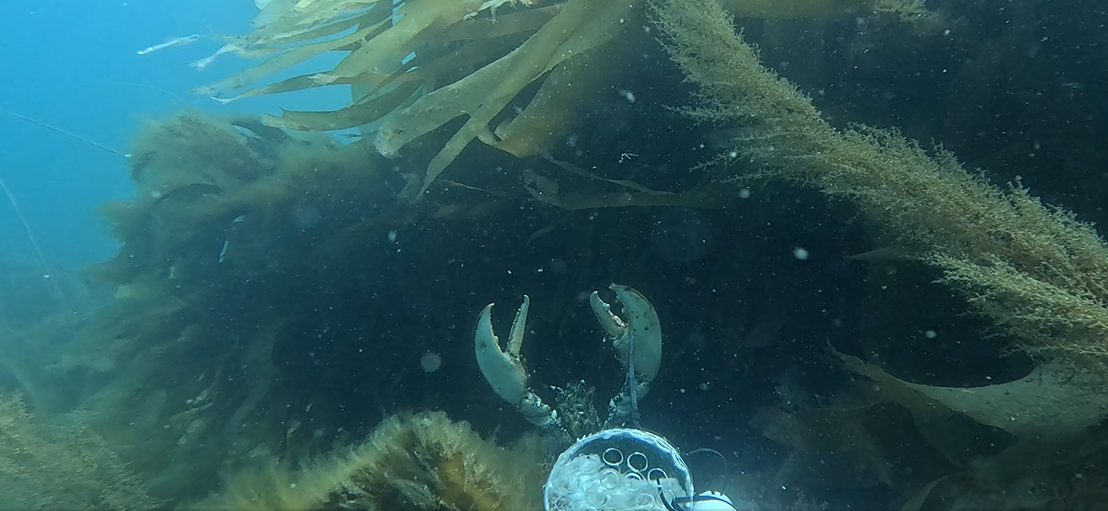 A screengrab of the lobster approaching our bait!
The data we collect from the recreational fishing area in the landing bay will eventually be compared to data collected in the landing bay. From this we should be able to determine whether the No Take Zone is higher in species richness than the fished zones around the island. Today we recorded two Corkwing Wrasse, one of which was an adult male. There is a good chance that these two corkwings could have a nest in the rocks near our deployment site. We also had 2 Ballan Wrasse, 6 juvenile Pollack, 2 Sea Bass and 13 Two-Spotted Gobies.
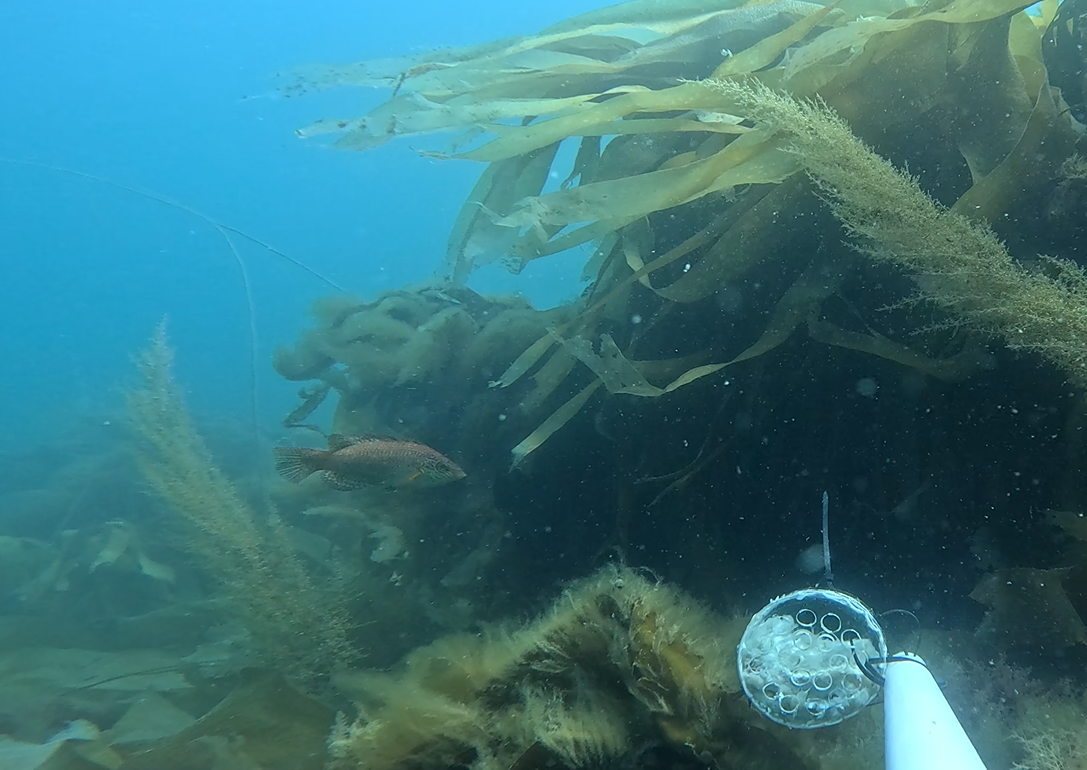 A male Corkwing Wrasse approaching the kelp forest.
Once we had retrieved the BRUV, I enjoyed a little free diving, during which I spotted a large Candy-Striped Flatworm, the two Sea Bass we caught on camera earlier, and many more jellyfish – including a beautiful Blue Jelly which I managed to swim into. Luckily their stings are only as painful as nettles. I ventured back down to the Landing Bay much later that evening, with some other brave swimmers on the island. We hoped to swim with the bioluminescent phytoplankton in the water after sundown. It was a perfect night for it, as the moon was waning and rising very late. The bioluminescence was visible from the surface of the water in the shallows, but swimming off the jetty was truly magical. We all sparkled beneath the water, it felt like swimming through the night sky! The columns of the jetty also glowed, as barnacles feasted on the shining plankton. After a lot of excited squealing and splashing, we all headed up the hill to bed, dodging the Manx Shearwaters as they came in to land near the road.
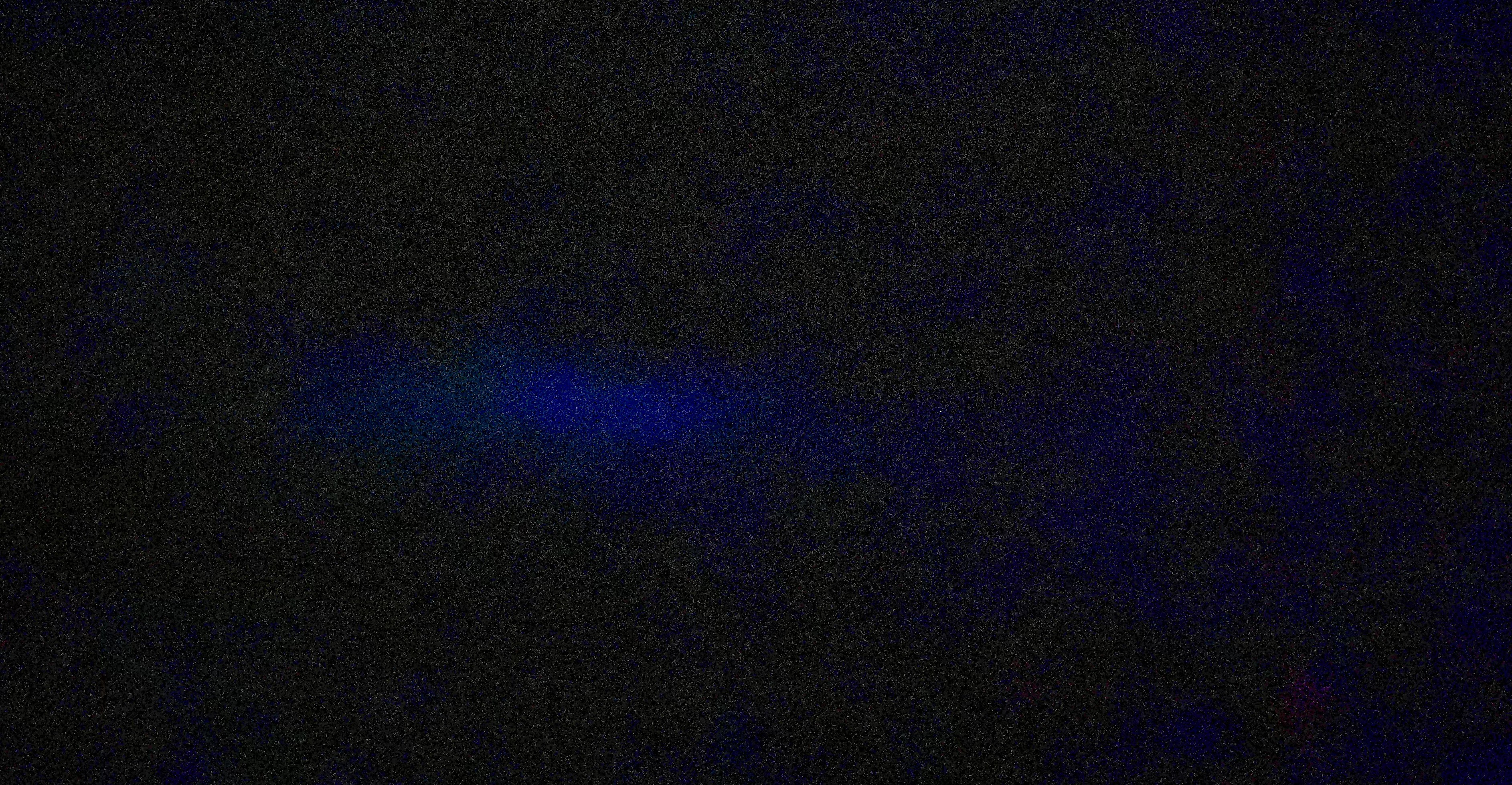 The best photo I could get of the bioluminescent algae in the waves. Doesn't really do it justice, but proof that it was there!
09/07/2026 – A Busy Travel Day
By Eleanor Harris
Today I was on a Tavern shift two, so I did not have to start till 12 noon. As a result, I decided to go for a swim on such a beautiful morning. Walking through Millcombe it was alive with the calls of juveniles calling their little hearts out, including Robins, Wrens, and Swallows to name a few. A lovely walk to start the morning much needed on what could be a busy day.
A morning swim was had in the clear, cool water which was slightly interrupted by a ‘jellyfish soup’. This included some rather large and impressive Compass Jellyfish so not ideal when wanting to swim in peace. Heading back to the village Swallows skirted the Landing Bay catching insects on the wing which was a lovely sight to see as they seem to be thriving on the island this year.
Back in the village I had a slow morning before work, enjoying the sunshine and reading a book.
Today promised to be a busy day with two school groups arriving for a day trip. Simon and Chloë showed them around the island balancing travel day tasks with tour guiding, so a busy day for both.
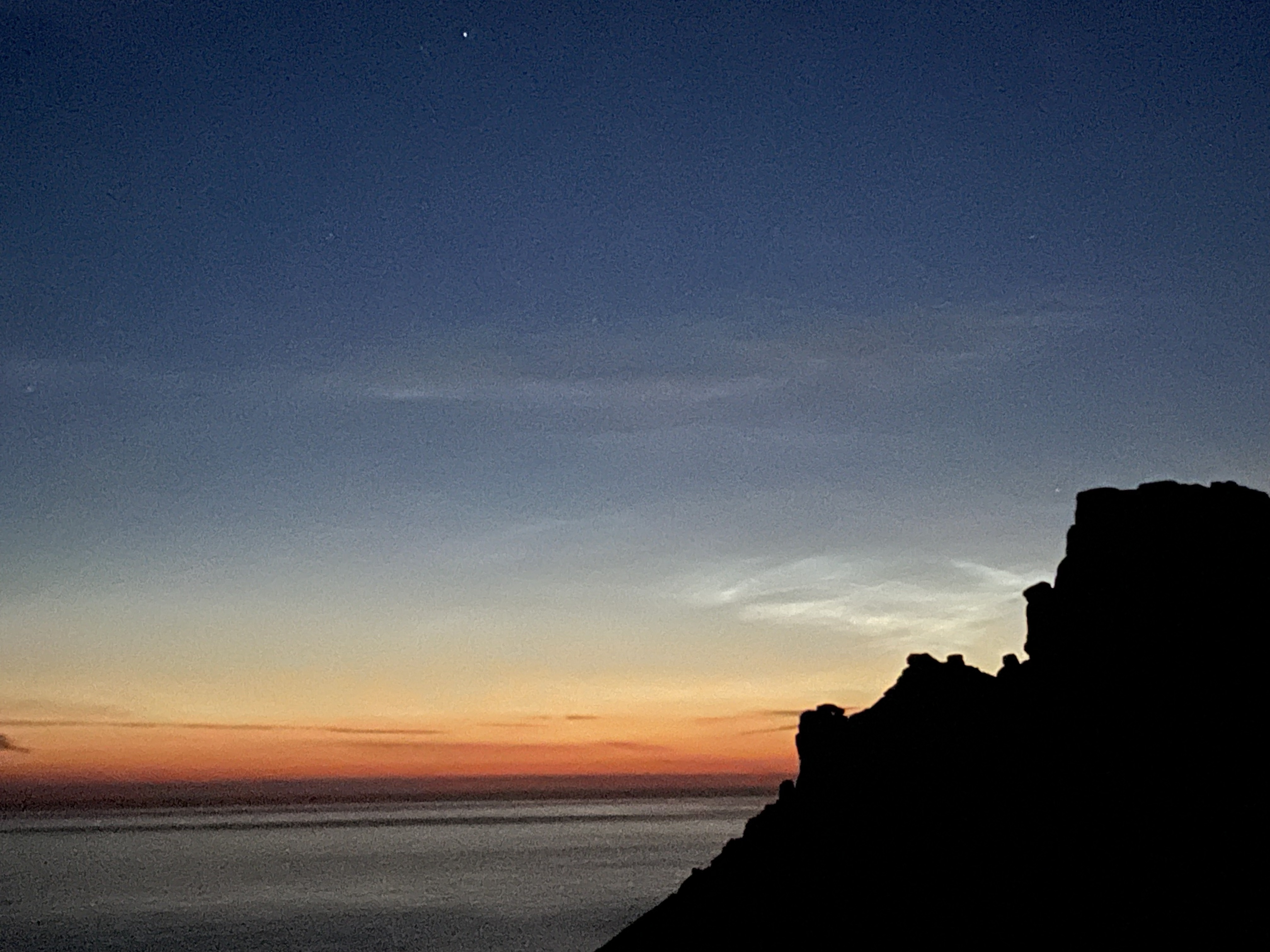 Noctilucent clouds EH
After my Tavern shift had finished we decided to head out for a Manx Shearwater evening. It was a rather light night, so we ended up watching noctilucent clouds for a while whilst waiting for birds to arrive. It was a good mix of birds with both new and retraps.
08/07/2026 – A couple of species moving!
By Thomas Weston
A short blog post today highlighting a fee of the bits and bobs completed on my bird day.
The day started at 6am and I was getting ready for some ringing as the weather was supposed to be calm and cloudy. Alas, we did not have the cloud, but we did have the calm, so I headed down to Millcombe to open a few nets. Before anyone else arrived, I saw the Great-spotted Woodpecker, a ‘rare bird’ for the island due to its overall scarcity. However this individual has been hanging around for over a week now which is nice. It was heard calling in the trees above the Gas Store – where our Spotted Flycatcher family were still residing – before flying out and up the valley to the trees above the Casbah. I lost view of the woodpecker thereafter, but I did have nice views of Stonechats, Linnets, Goldfinches, and the singing Song Thrush. I opened the nets, but within two hours a new juvenile Blackbird and one of our breeding female Chiffchaffs were the only birds caught. However, a single House Martin and two Swifts were the only noticeable migrants. Meanwhile, Greg and Emma opened the moth trap, and a few new species for the year were recorded which was nice. Names to be sent soon!
Lucile, Eleanor, and I decided to open the traps for a while and we ended up catching just shy of 20 Starlings and a new House Sparrow juvenile. This was only one of two unringed sparrows on the island and it was great to catch this wild born bird, aptly known as Austin.
Up-island, Chloe’s disturbance survey resulted in a pair of Grey Herons flying around Gannets and seen/videoed. Emma and Greg later went up there to do some seabird monitoring, but at the time of writing the outcome is unknown.
The rest of my day was full of data inputting, checking our Swallow broods before running log, and having a relaxing evening enjoying a bit of the summer sunshine.
07/07/2026 – A brief Puffling and a darting Darter
By Greg Lee
A warm day beckoned and it was another check of the Guillemot and Kittiwake plots at Aztec Bay. It feels quite exciting every day to see a reduction in the Guillemot numbers as chicks fledge and adults leave the ledges where they have been packed in like sardines for two months, if not more. Some of the Kittiwake chicks are now looking quite nice and large, with the rather smart juvenile plumage coming through, with lovely dark carpal bars contrasting with the grey mantle, smart black tailbands and black neck collars. However, some still remain fluffy and small. It wasn’t all rosy however, as it was clear that something had been predating some of the Kittiwake nests with a couple of nests that once held chicks being empty, with a rather despondent-looking adult stood on top. I suspect that the Ravens or large gulls have been making use of this easy food source. Perhaps Kittiwakes should think about taking a leaf out of an Arctic Skua's book and be a bit more vicious in their nest protection. They could also learn a thing or two from some of the Terns! Still, life and death are a large part of seabird colonies and it isn’t an easy place to live... We’re just lucky on this island to witness some of the dramas that unfold every season in our seabird 'cities'.
Heading back to the Village after my plots, I then spotted yet another Red-veined Darter, a nice and bright male just north of Halfway Wall. The LFS report for this current year is going to be quite stuffed with records of this dragonfly, just how many are we going to get?!
Later on, it was seabird station and whilst gleefully showing our day visitors good views of Puffins, I was thrilled to see a well-developed chick or 'Puffling' emerge from its burrow, take a small look around, whirr its wings and then dive back into the safety of its subterranean recess. This was my first for the season and hopefully a few more Pufflings should appear before they fledge.
Elsewhere on the island, Hummingbird Hawk-moths are becoming quite conspicuous and both Red Admirals and Painted Ladies are in good numbers, though perhaps not as numerous as the Meadow Browns, with certain areas seeing a cloud of this species fly out with every footstep through long grass. Two Swifts seen streaming over were also counted. With a warm night, we also set the moth trap at the Castle, being treated to another very stunning moon rise, illuminating a long streak of moonlight in the Bristol Channel.
 An impressionistic moonrise by G.Lee