



Bird Sightings
19/06/2026 – A Comedy of Errors for a Band of BRUV-ers
By Jessie Dermody
A very rainy day today, but luckily it was still quite warm on the island. Most of my planned activities for the day revolved around the water anyway, so I didn’t mind getting very soggy. The assistant warden team aimed to test our baited remote underwater video (BRUV) setup today. This is the camera trap that Chloë mentioned in her last blog post.
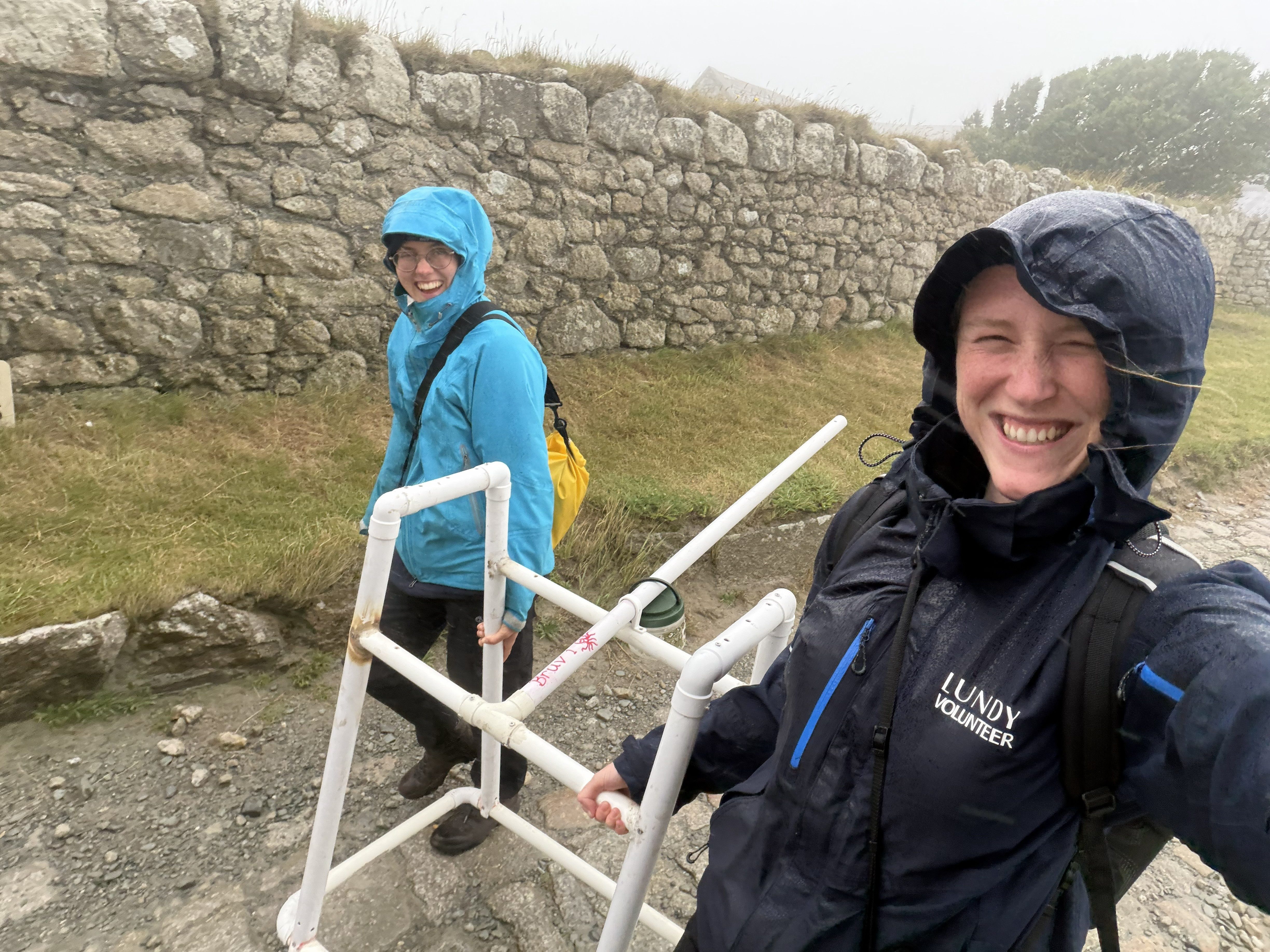 Jessie and Chloe carrying the BRUV frame to the beach. Photo by Chloe Langmead
We hope that this will be a very useful tool in assessing which sea creatures are thriving within lundy’s marine protected area, as we can use this camera to count how many different species are present in a given area. Chloë, Tara and I spent a good part of the day attaching the camera, bait canister and weights to our frame. We had a couple of setbacks, including a broken camera, a lost camera and some issues with mounting the camera that we did have. Once we’d fixed these issues, we lowered our BRUV onto the seabed to film for an hour, and went to do some rockpooling!
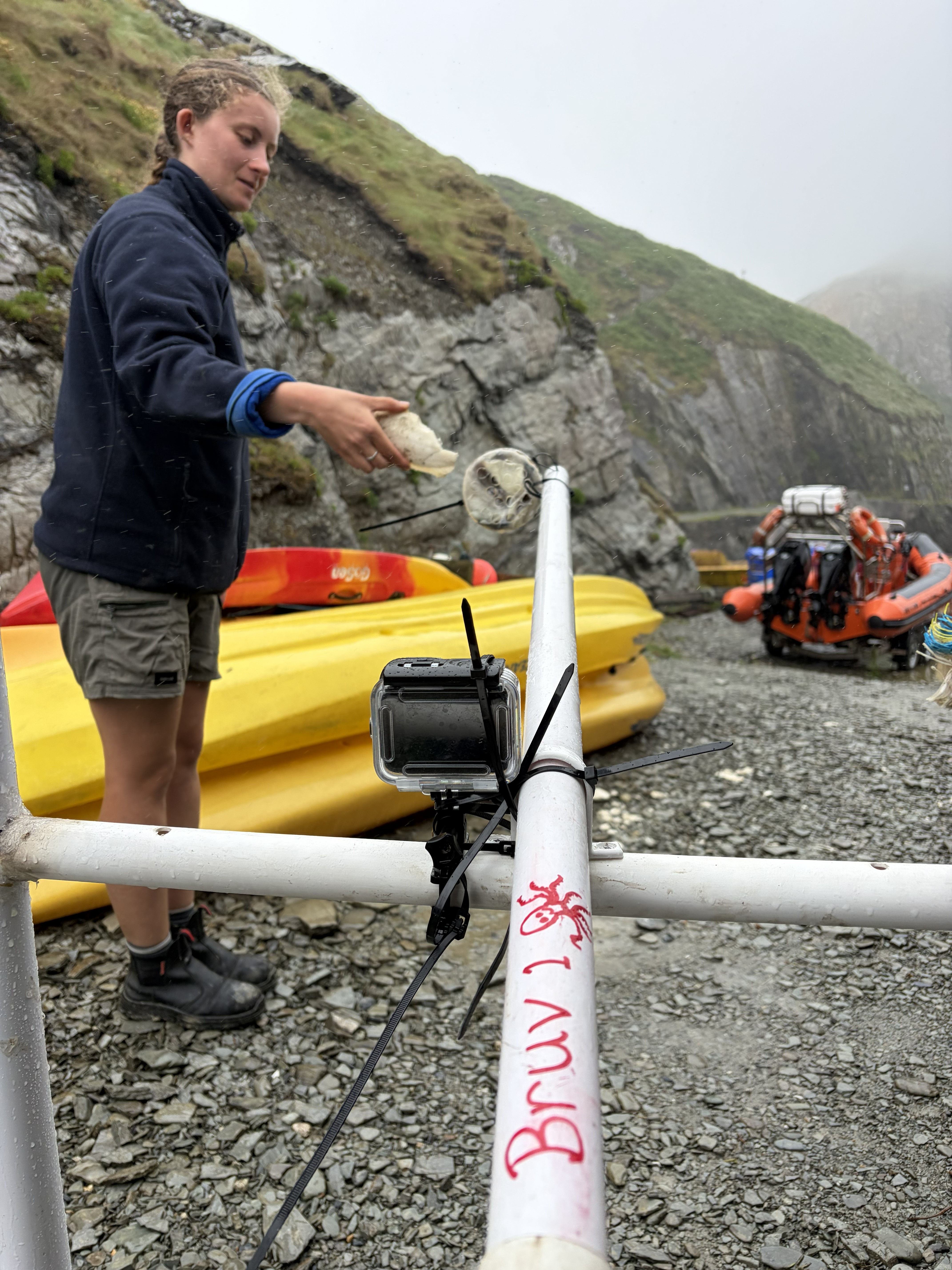 Assistant warden Tara testing what our camera would see if a fish approached the bait. By Chloë Langmead
We were supposed to lead a rockpool ramble today, but the weather did not allow for that, so the three of us went for a ramble by ourselves! I was very happy to find two sea slugs (my favourite animals) in the pools, Favorinus branchialis and Antiopella cristata – the Crystal Sea Slug!
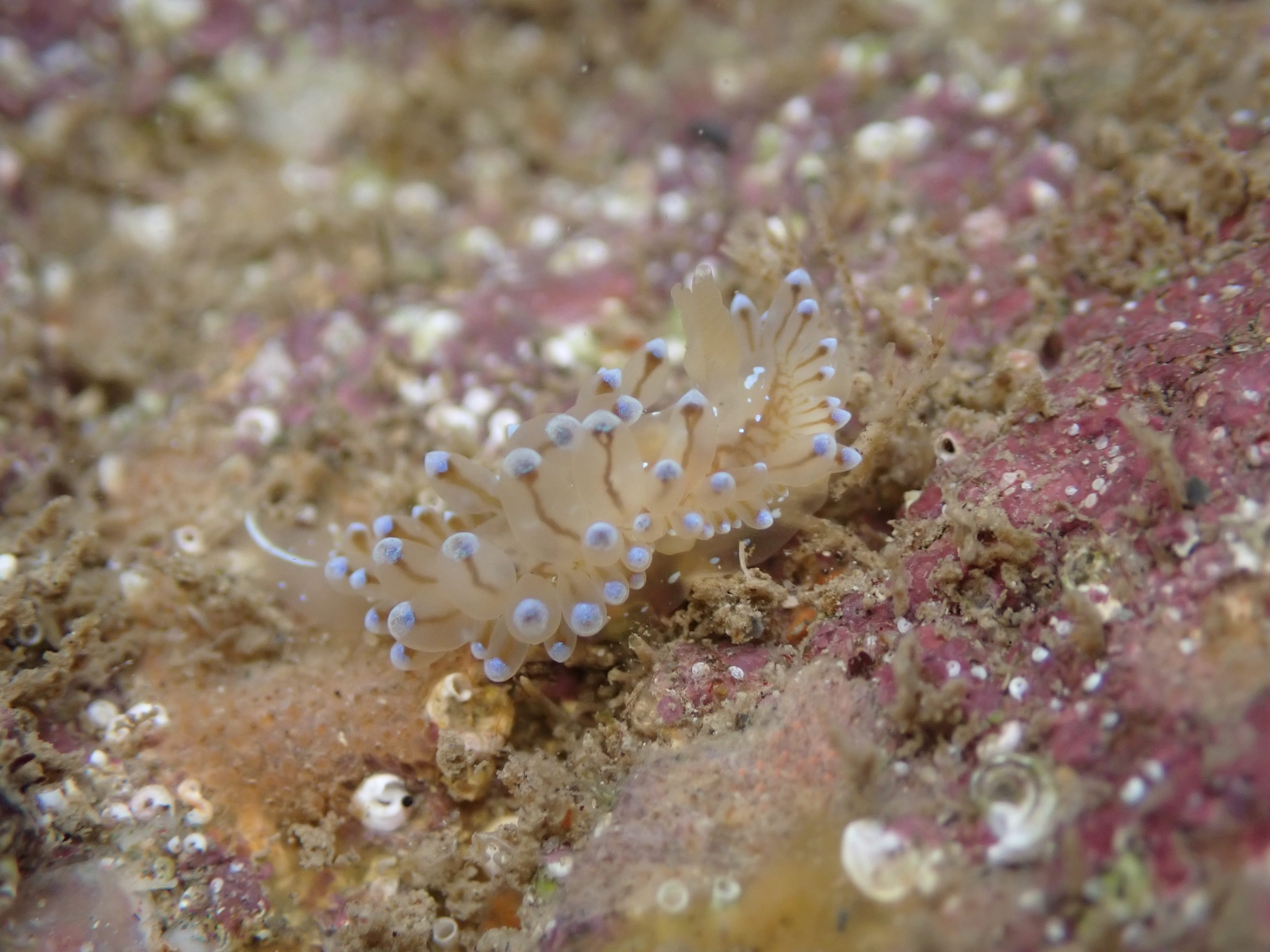 Crystal sea slug on the underside of a rock in Devils Kitchen by Jessie Dermody
This was my first time finding a crystal sea slug myself, so I was very excited. Favorinus is also an exciting find, as this species of slug feeds on the eggs of other nudibranchs, so its presence here shows that there are lots of slugs around.
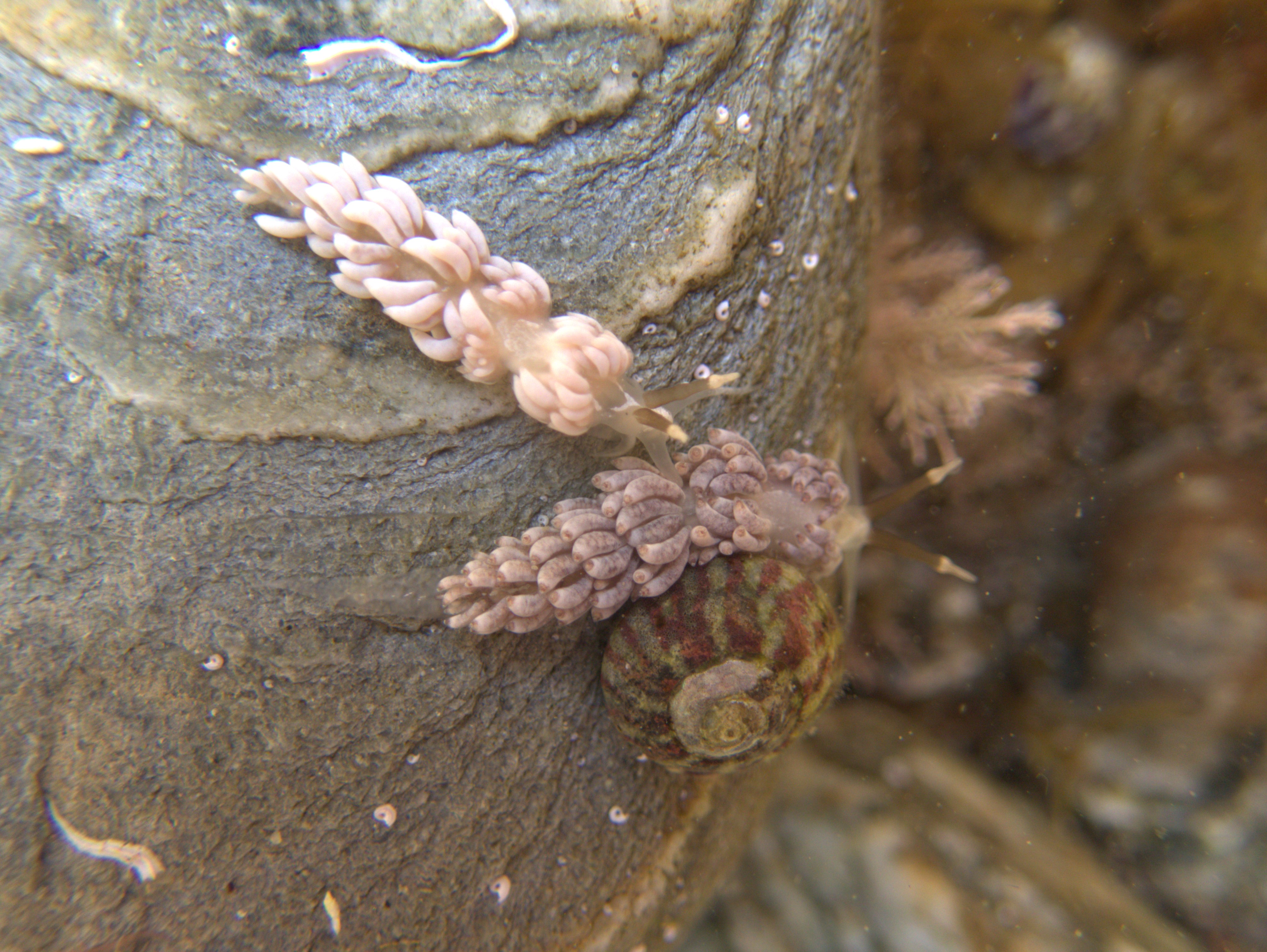 Two Favorinus branchialis sea slugs in Falmouth, Cornwall (I couldn't photograph the individual I saw today). By Jessie Dermody )
We also found an interesting fish, a large edible crab and both types of cushion star! The most commonly reported cushion star (Asterina gibbosa) and has many different colour morphs, whilst the other type of cushion star (Asterina phylactica) is a lot smaller, and can be identified by the red star in the middle. Along with one of the large cushion stars, I discovered many starfish babies.
 Tiny baby cushion stars (likely Asterina gibbosa). Terrible iphone camera photo by Jessie Dermody
After rockpooling, we returned to retrieve our BRUV. Unfortunately, when we tried to pull it up out of the water, we noticed that part of the frame was caught on the rope, and we were at risk of breaking it. Eventually, we managed to pull it up using a mixture of the rope and a boat hook. Upon reviewing the footage, we realised that our setup had fallen backwards while under the water, so instead of filming the seabed, it had been pointing upwards the whole time!
 An anti-climatic BRUV screen capture. Can you spot the sand eel?
Not many sea creatures were caught on camera today, which was disappointing. Then again, that’s what a pilot test is for! The camera worked and we learnt a lot about what to look out for in deployment sites. Hopefully our next try will be more successful. Given the weather today, I do not have any other exciting sightings to report! I will hopefully have some better news in my next blog post
18/06/2026 – The summer rolls on
By Greg Lee
A calm start to the day with fog and light rain curtailing any opportunity to open the nets in Millcombe. With a busy day for the boat, my main task was joining Emma out at Jenny's Cove to run the seabird station mid-afternoon after tackling some of the rarity descriptions for the spring early morning.
On my journey out to Jenny's Cove, I sighted a Meadow Brown whizzing over the ground, my first of the year for this grassland butterfly species of high summer. Certainly it made me think of the numbers that would be out across some of my favourite Cotswolds butterfly haunts, Prestbury Hill, Rough Bank, Swift's Hill, Daneway Banks etc. In the long grass, a Heath Spotted Orchid was still in flower, though was surprisingly cryptic. I also spotted a Swift scything through the air, just one of many seen by several observers across the island today. At this time of year, many non-breeding adults will wander around looking for potential nest-sites for the following season. These immature birds are sometimes known as "bangers" as they will knock potential nest-sites to check if they are occupied. In Jenny's Cove itself, the gurgling of Guillemots and whinnying of Kittiwakes filled the air and it was certainly a good show of Puffins, all in all making for a good day for showing members of the public our special seabird colonies. A Kestrel passing through interesting sighting, we're speculating that at least three individuals are currently on the island at the moment.
 Heath Spotted Orchid by G.Lee
Later on, we said goodbye to researcher Jayden Parker who has been with us for the past three weeks. As we headed down to say our goodbyes at the Oldenburg, we noted an impressive amount of jellyfish in the Landing Bay, mostly Moon and Blue. A small shoal of Sand Eels shimmered as they caught the light, these fish are a very key part of the diet of many of our breeding seabirds. Fortunately, the waters were quite settled and with the low cloud, made for quite a pleasant late afternoon.
 The Oldenburg departing by G.Lee
Other sightings across the island for the day included a Reed Warbler chuntering down in Millcombe, two House Martins moving south and a grand total of 26 Swifts passing through. 56 Painted Ladies reflected the further increase of these butterflies.
16/06/2026 – Chicks!
By Emma Abel
This morning I headed through the low hanging fog to Aztec Bay for my Guillemot and Kittiwake monitoring, a very atmospheric walk with grazing Soay Sheep appearing from the haze. I stopped to appreciate some English Stonecrop flowering on Halfway Wall, its flowers like star bursts among the Lichen.
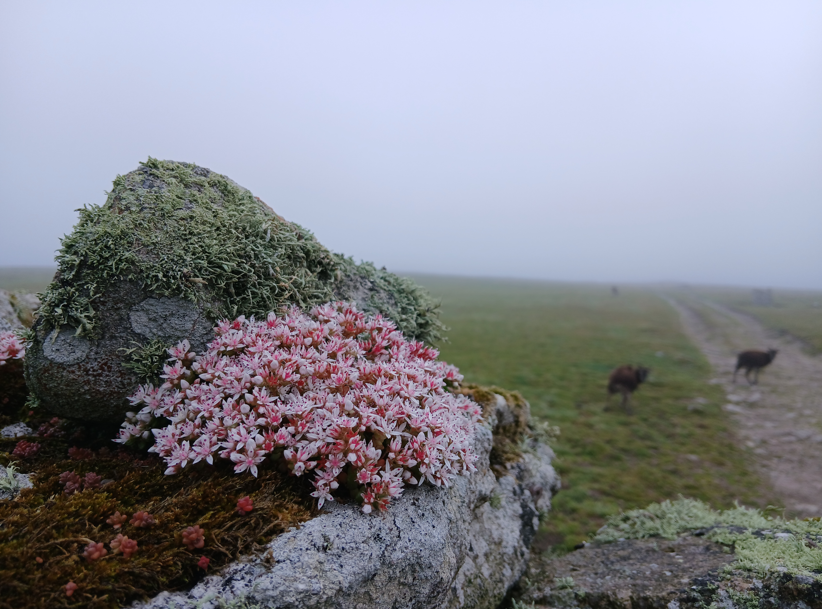 English Stonecrop in the Fog by Emma Abel
Thankfully the fog sat like a hat on the island and as I ventured down to my monitoring plot, the colony emerged clear as ever. Today was an exciting day for me as Greg has been carrying out the Guillemot and Kittiwake plots while I focused on Puffins, which means while I've been seeing lots of Sandeel visits, he got to see the first chicks yesterday. I had certaintly been missing out. The Guillemot chicks were only a few days old with spiky looking down and still showing their egg tooth, a hard addition to their beaks to help chicks break out through the thick egg shell that is indicative of a new hatchling. I managed to spot 41 in my little plot with many other birds still incubating eggs and likely sitting on hidden chicks. Kittiwakes were more secretive with their chicks today, parents keeping them warm underneath their bodies in their nests, but observing them shuffle and change position I managed to catch a glimpse of various downy balls of fluff.
 Puffins at Jenny's Cove by Emma Abel
After nests were checked and chicks were admired I headed to Jenny's Cove for the Seabird Station. It was a busy day with both a large ambassador tour and a school group passing through to peek at the puffins. It was lovely to chat to over 70 visitors about our seabirds and everyone got to see through the scope with the fog descending just as the last visitors turned heel for the village.
Elsewhere on the island it was another quiet day for new birds with the evening wildlife log in the tavern consisting of the common breeders and their fledgelings, especially as most of the rest of the team had been on Housekeeping and were too preoccupied with linens and polish to look out for rarities passing through.
15/06/26 – Happy Monday!
By Chloë Langmead
Happy Monday, I hope you all had great weekends!
 Mallard Duckling. Photo by Jayden
Yesterday morning, Thomas, Lucile, Jayden, Tara and I went out to catch 3 Mallard ducklings to ring. This went very smoothly and was exciting as not many Mallard get ringed on Lundy. We hope to go back next week to ring the adults while they moult.
This morning started with a seal disturbance survey at Brazen Ward. It was fairly high tide so there weren’t many seals about, most were probably off foraging. However I was treated to the cool sight of a Peregrine flying right past me, carrying a freshly killed bird (unfortunately it passed too quickly for me to tell the species)!
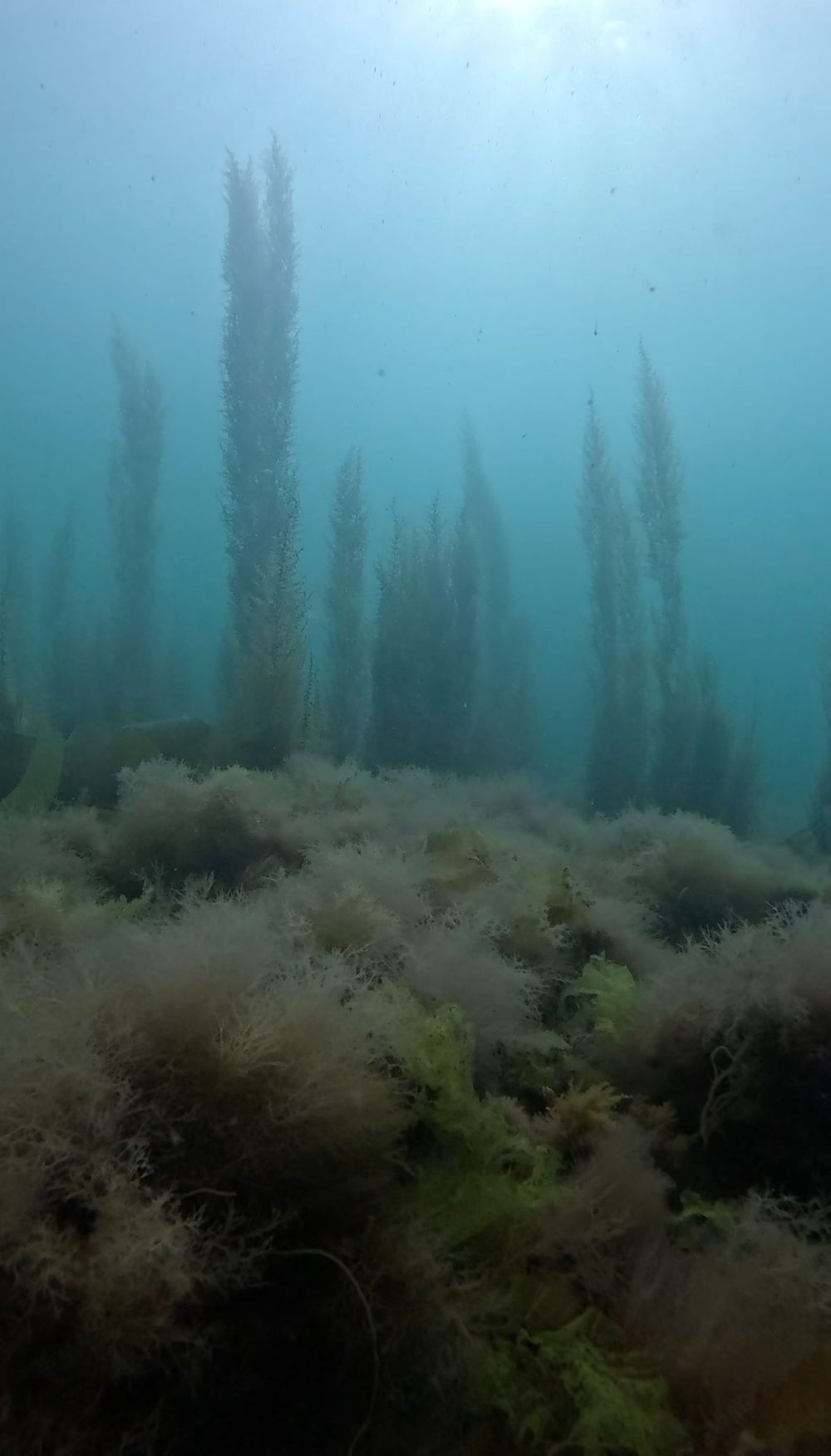 Due to a lack of Bears on the island, we're going on a Snorkel Safari! Pic by Chloë
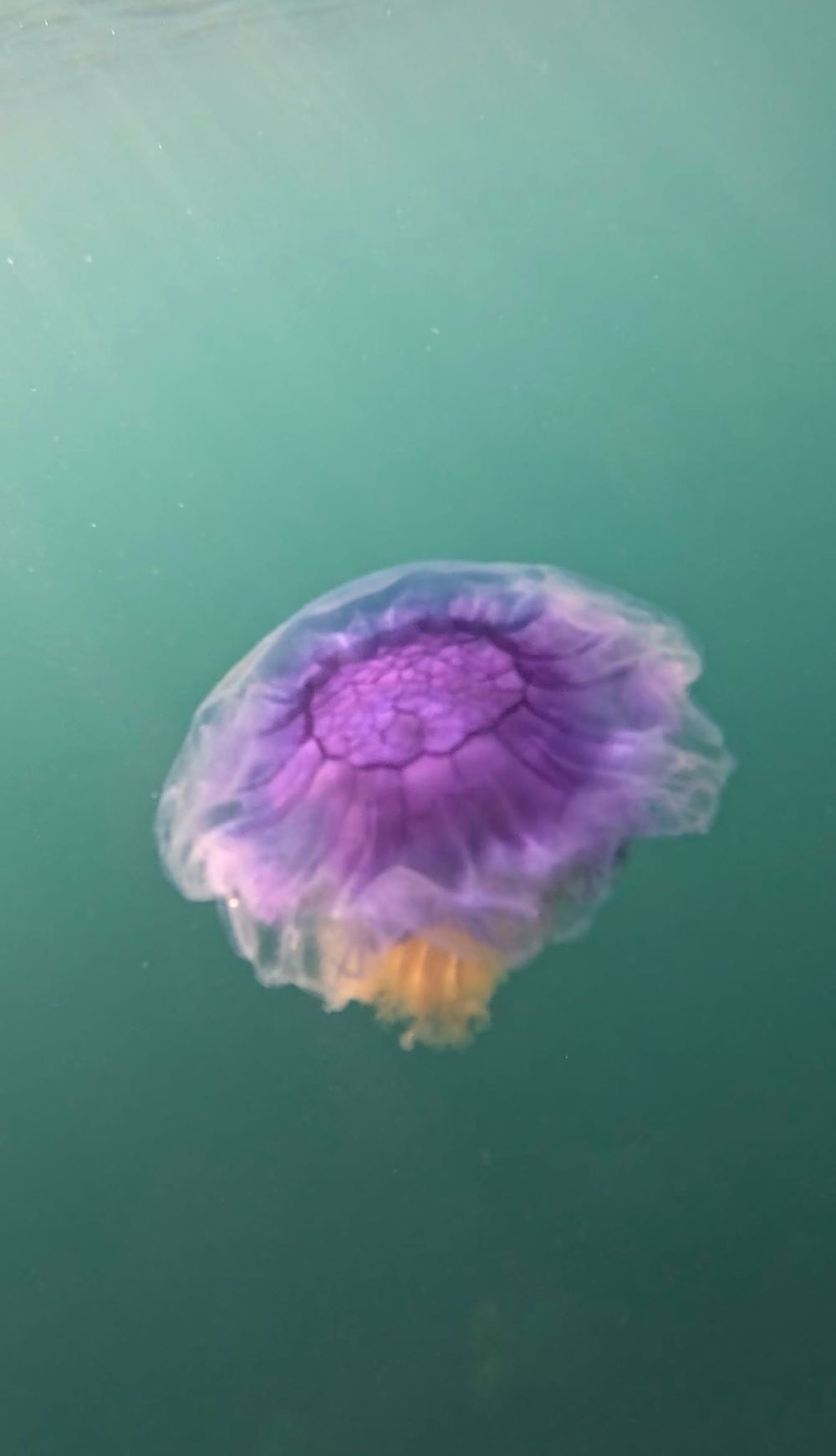 Blue Jellyfish by Chloë
Next it was off to the Landing Bay for the first snorkel safari of the year! Despite the visibility being less than ideal due to some easterly’s we still had a great time! After getting fully geared up in neoprene we found lots of awesome marine life! Some of the highlights were Cowries, some big Shrimp, an intact Edible Crab moult, Dead Man’s Fingers coral and Jessie found a Nudibranch!